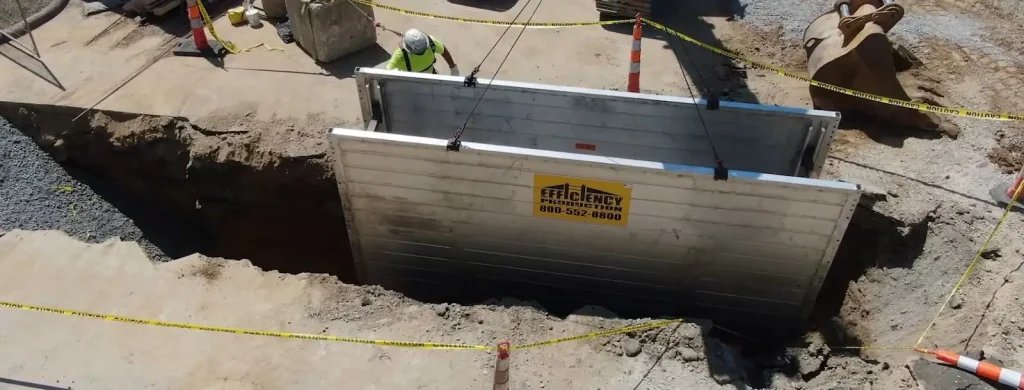
If you’re digging a trench, one of the most important questions to answer before anyone gets in the ground is simple: When is trench shoring actually required?

The answer depends on trench depth, soil conditions, the jobsite and the protective system being used. OSHA has specific requirements for trenching and excavation designed to protect workers from cave-ins, one of the biggest hazards associated with trench work.

Here’s what contractors need to know.

The 5-Foot Rule for Trench Protection

One of the easiest numbers to remember is 5 feet.

According to OSHA, employees working in an excavation 5 feet deep or greater generally must be protected from cave-ins by an adequate protective system.

There are exceptions, including excavations made entirely in stable rock.

What about a trench that’s less than 5 feet deep?

That doesn’t automatically mean it’s safe. A competent person still needs to examine the excavation and determine whether there is a potential for a cave-in.

In other words, depth is important, but it isn’t the only thing that matters.
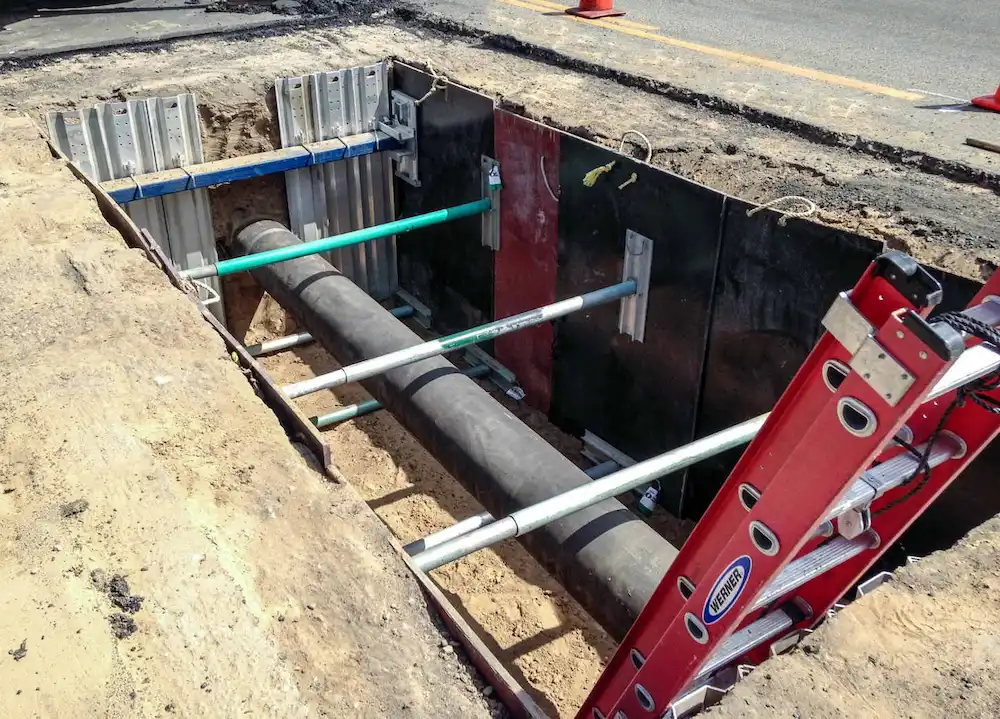
Hydraulic Trench Shoring

What Happens When a Trench Is More Than 20 Feet Deep?

Once an excavation goes beyond 20 feet, additional requirements come into play.

Protective systems for excavations deeper than 20 feet must be designed by a registered professional engineer or based on data prepared or approved by a registered professional engineer.

This is where planning ahead becomes especially important. Deep excavations can require engineered shoring solutions based on the depth, soil, surrounding structures, utilities and other jobsite conditions.

Shoring vs. Shielding vs. Sloping

Shoring

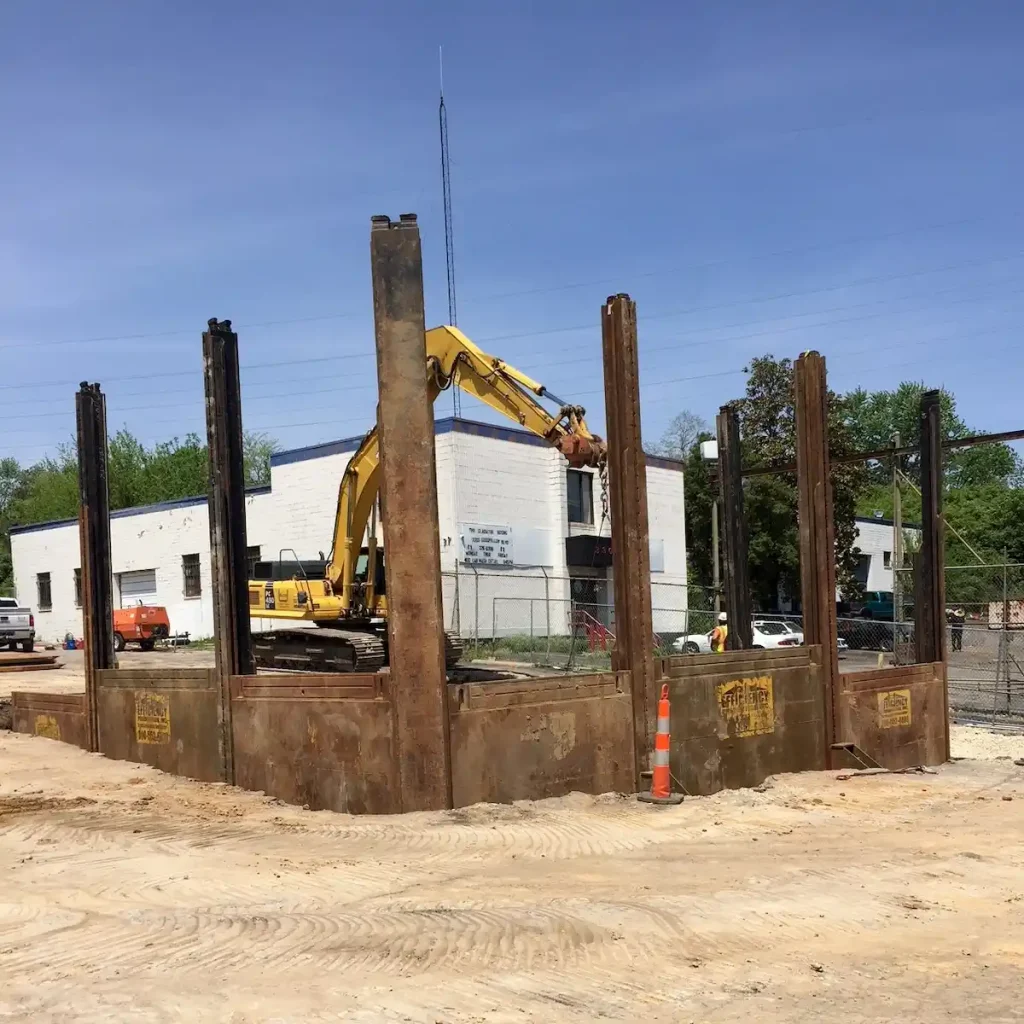
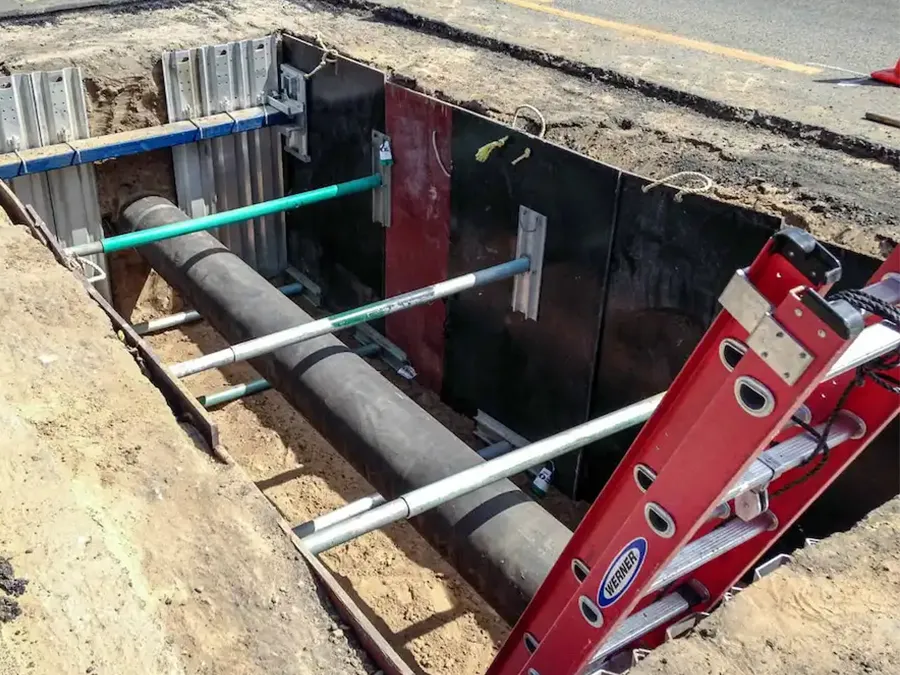
A shoring system supports the sides of an excavation to help prevent a cave-in.

Depending on the application, contractors may use hydraulic shoring, slide rail systems or other engineered shoring systems.
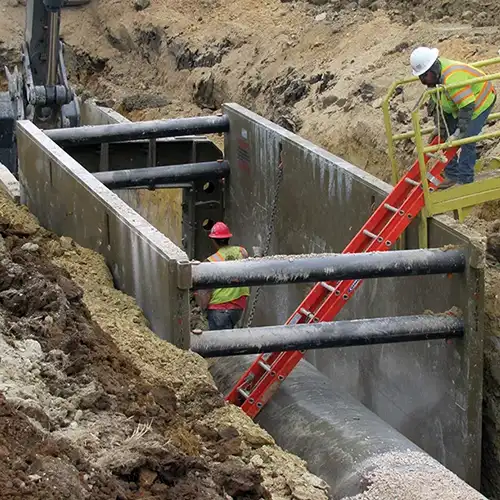
luby shoring for utilities

Shielding

Shielding doesn’t necessarily prevent the soil from moving. Instead, it provides a protected area for workers if a collapse occurs.

Trench boxes and trench shields are common examples.
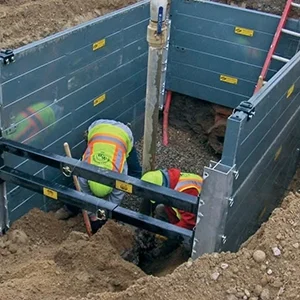
Luby Shoring Build A Box Trench System

Sloping & Benching

Instead of installing a support or shield system, contractors may be able to cut the sides of an excavation back at an approved angle.

The allowable configuration depends on factors including soil classification and site conditions.

benching with luby shoring

Don’t Forget About Soil Conditions

Not every trench behaves the same way.

Soil classification plays an important role in determining how an excavation should be protected. OSHA classifies soils into categories including Type A, Type B and Type C, with Type C representing the least stable classification.

Water, previously disturbed soil, nearby traffic, heavy equipment, vibration and other jobsite conditions can also affect an excavation.

That’s why trench safety should never be based on depth alone.

The Competent Person Matters

OSHA trenching requirements frequently reference the role of a competent person.

Before workers enter an excavation, the competent person should evaluate conditions and identify existing or predictable hazards.

Conditions can also change during the project.

Rain, water accumulation, equipment movement, vibration and changes to the excavation can all affect trench stability. An excavation that looked one way yesterday shouldn’t simply be assumed to be safe today.
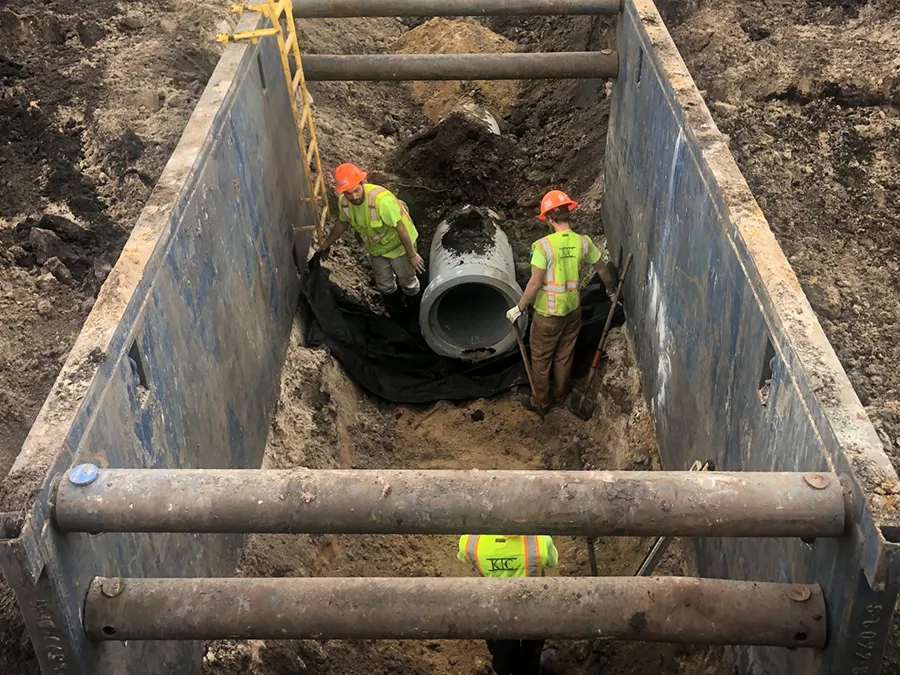
trench shielding vs trench shoring

Choosing the Right Trench Protection System

There isn’t one trench protection system that works for every excavation.

A shallow utility installation may have completely different requirements than a deep sewer project, manhole installation or excavation next to an existing structure.

Before selecting equipment, consider:

  • Excavation depth and width
  • Soil classification
  • Pipe or utility size
  • Excavator lifting capacity
  • Surrounding structures and utilities
  • Water conditions
  • Required working area inside the excavation
  • Access and egress
  • Manufacturer tabulated data
  • Whether an engineered system is required

Planning the protection system before excavation begins can help prevent delays once the job is underway

Need a Trench Box or Shoring System

Luby Shoring provides trench safety equipment and excavation support systems for contractors throughout Missouri and Illinois.

Our Fenton, Missouri location stocks over one million pounds of shoring equipment, including trench shields, street plates, slide rail systems and other trench safety equipment.

Whether you’re installing water lines, replacing sewer, working on storm drainage or planning a more complicated excavation, our team can help you determine what equipment may fit your project.

Need shoring equipment for an upcoming job? Call Luby Shoring at 636-660-7467 to discuss your excavation and equipment needs.

This article is intended as general information and is not a substitute for OSHA regulations, manufacturer tabulated data, a competent person’s evaluation or professional engineering when required.
The latest technological advancements, such as smart helmets, exoskeletons, and drones, are transforming construction safety. Contact us today.

At Luby Equipment Services, construction safety is our top priority. We’re always looking for emerging technologies that can enhance worker safety. As technology evolves, so does its potential to make construction sites safer and more efficient.

Stay ahead of the curve with Luby Equipment Services, where safety and cutting-edge technology create safer worksites for everyone.

luby-shoring-gallery

Smart Helmets: Beyond the Ordinary Hard Hat

What appears to be an ordinary hard hat is now being revolutionized with intelligent technology. Smart helmets from various brands offer workers a virtual display of the job site, providing more accessible training and a quick overview of the project’s scope. These helmets can also show real-time instructions to workers, improving communication and accuracy. Additionally, they collect valuable data, helping you comply with safety regulations and streamline record-keeping.

Exoskeletons: Reducing Back Strain and Injuries

According to OSHA, back injuries account for over 600,000 workplace injuries annually, and construction work often puts significant strain on the body. Enter exoskeletons—wearable devices designed to alleviate the pressure on workers’ bodies, particularly when lifting heavy materials. By distributing the weight more evenly and supporting key muscles, exoskeletons reduce the risk of injuries, making strenuous tasks safer and less taxing on the body.

Drones: Enhancing Site Surveillance and Planning

Drones are no longer just recreational gadgets but are becoming indispensable tools on construction sites. Equipped with cameras and sensors, drones can help inspect hazardous areas of the job site that would be unsafe for workers to enter. Beyond safety, drones are also excellent for site planning and surveying, providing a birds-eye view of the project before it even begins and enabling more precise project management.

The Future of Construction Safety is Here

Technology continues to reshape the construction industry, and its role in enhancing safety and efficiency is undeniable. From intelligent helmets to exoskeletons and drones, these advancements are helping to safeguard workers and streamline operations. The tech sector will undoubtedly play a vital role in the future of construction safety, and we look forward to seeing how these innovations will continue to evolve.

Stay ahead of the curve with Luby Equipment Services, where safety and cutting-edge technology create safer worksites for everyone.

Proper trench shoring and OSHA compliance can prevent deadly collapses and protect workers and emergency responders. Contact us today.

At Luby Equipment Services, we’re here to help you start every job safely and ensure compliance with all OSHA regulations. By recommending the right tools and equipment, we guarantee your projects are completed efficiently and securely, with minimal risk to your team.

For more information or expert advice, visit our website or call 636-660-SHOR. Keep your team safe, and let’s prevent the next tragedy before it happens.

luby shoring st.louis

The Tragic Reality of Trench Collapses

It’s a tragic reality in the construction industry: trench collapses due to shortcuts or insufficient shoring equipment. Despite regular news coverage of these incidents—often resulting in severe injury or death—many construction companies still fail to comply with OSHA regulations for trench safety.

The Risk to Emergency Responders

When a trench collapses, the first call is to emergency personnel, such as firefighters, who risk their own lives to rescue those trapped. Alarmingly, trench-related accidents have a mortality rate 2.5 times higher than other construction events, according to FireChief.com. Not only do these situations endanger workers, but rescuers also face severe injury or even death.

OSHA Guidelines for Trench Safety and Rescue Operations

OSHA has strict guidelines for both trench digging and rescue operations. Like construction companies, fire departments must adhere to these standards or face penalties. Yet, the best way to prevent these dangerous rescue situations is to use proper shoring equipment and follow safety guidelines from the beginning of a project. This proactive approach reduces risk, saves lives, and keeps workers out of harm’s way.

Partnering with Luby Equipment Services for Safer Jobsites

At Luby Equipment Services, we’re here to help you start every job safely and ensure compliance with all OSHA regulations. By recommending the right tools and equipment, we guarantee your projects are completed efficiently and securely, with minimal risk to your team.

For more information or expert advice, call 636-660-SHOR. Keep your team safe, and let’s prevent the next tragedy before it happens.