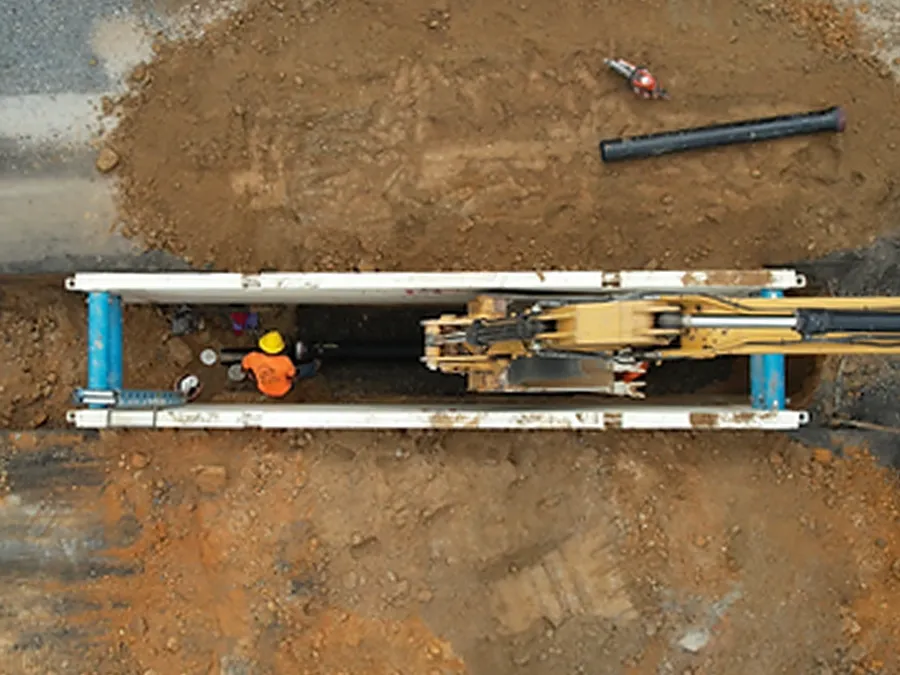
If you’re digging a trench, one of the most important questions to answer before anyone gets in the ground is simple: When is trench shoring actually required?

The answer depends on trench depth, soil conditions, the jobsite and the protective system being used. OSHA has specific requirements for trenching and excavation designed to protect workers from cave-ins, one of the biggest hazards associated with trench work.

Here’s what contractors need to know.

The 5-Foot Rule for Trench Protection

One of the easiest numbers to remember is 5 feet.

According to OSHA, employees working in an excavation 5 feet deep or greater generally must be protected from cave-ins by an adequate protective system.

There are exceptions, including excavations made entirely in stable rock.

What about a trench that’s less than 5 feet deep?

That doesn’t automatically mean it’s safe. A competent person still needs to examine the excavation and determine whether there is a potential for a cave-in.

In other words, depth is important, but it isn’t the only thing that matters.
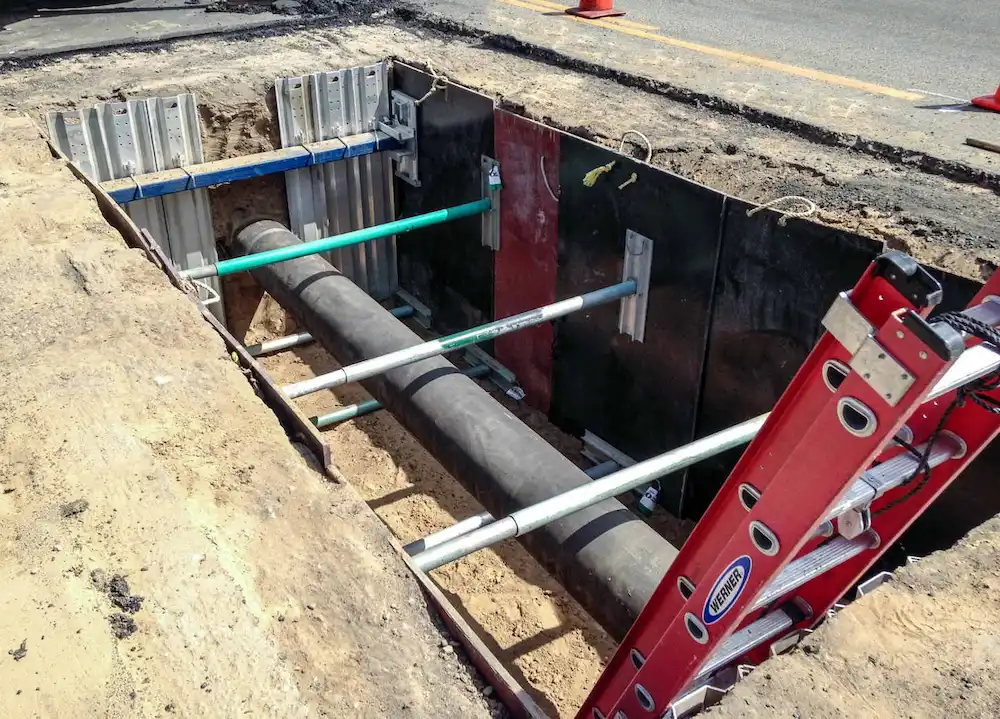
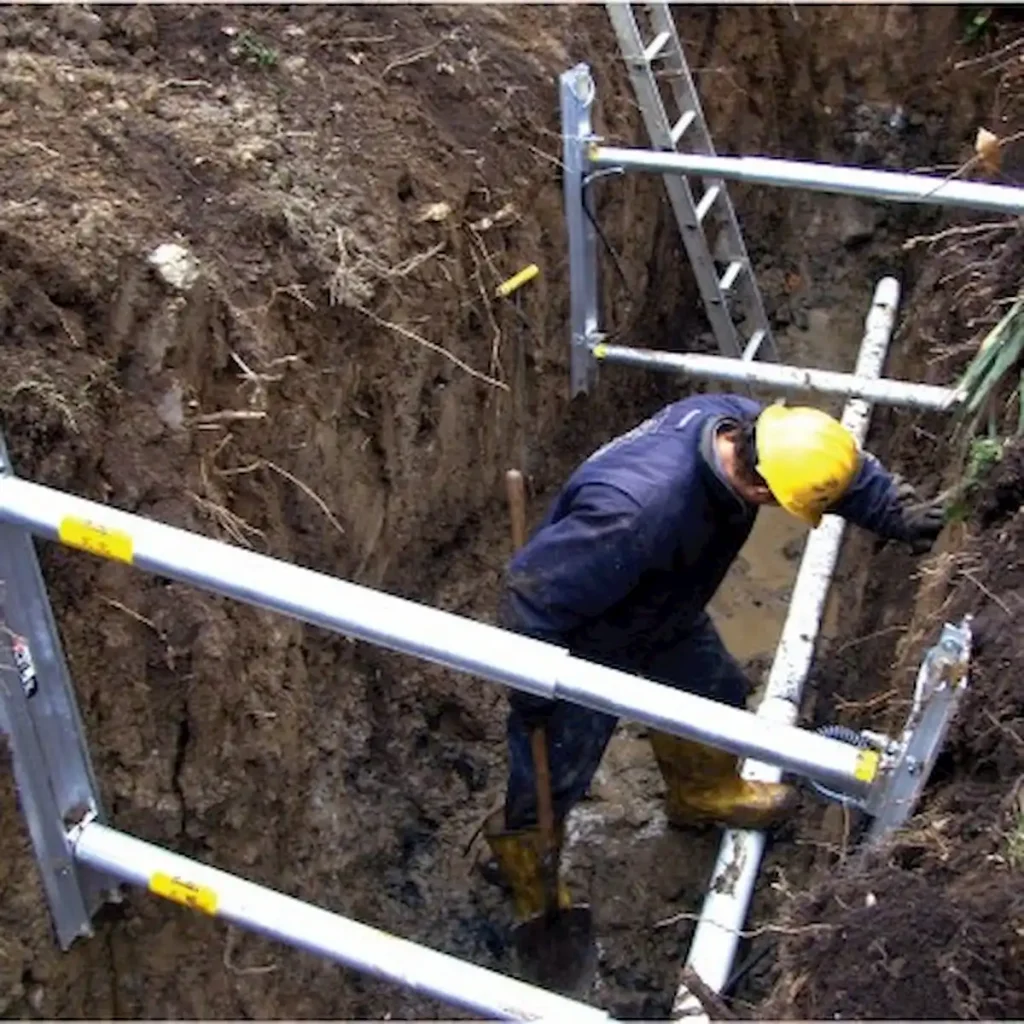
Hydraulic Trench Shoring

What Happens When a Trench Is More Than 20 Feet Deep?

Once an excavation goes beyond 20 feet, additional requirements come into play.

Protective systems for excavations deeper than 20 feet must be designed by a registered professional engineer or based on data prepared or approved by a registered professional engineer.

This is where planning ahead becomes especially important. Deep excavations can require engineered shoring solutions based on the depth, soil, surrounding structures, utilities and other jobsite conditions.

Shoring vs. Shielding vs. Sloping

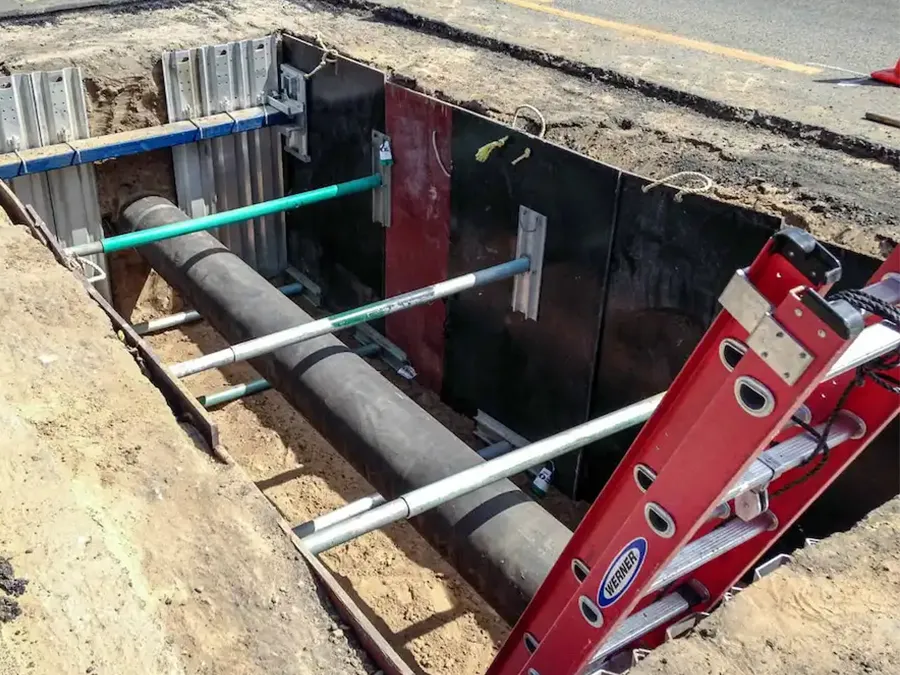
Shoring

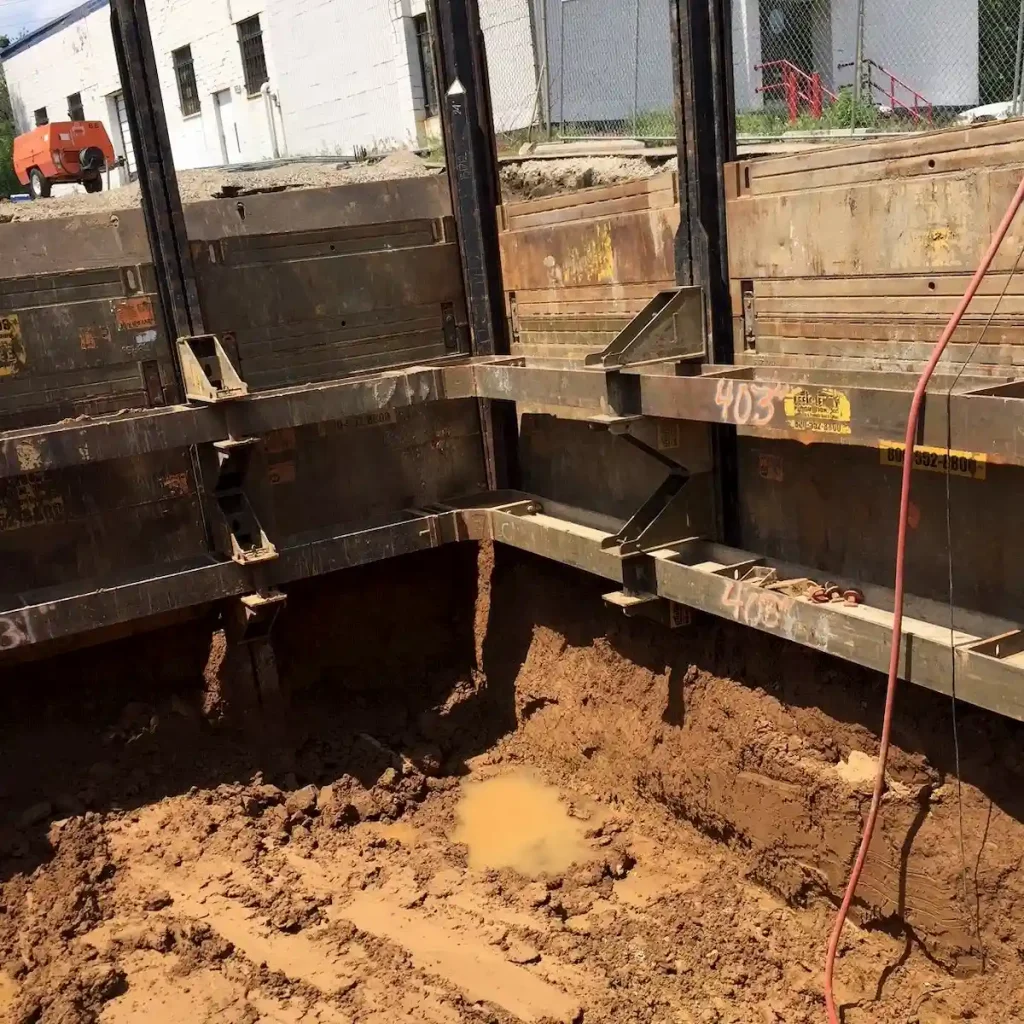
A shoring system supports the sides of an excavation to help prevent a cave-in.

Depending on the application, contractors may use hydraulic shoring, slide rail systems or other engineered shoring systems.
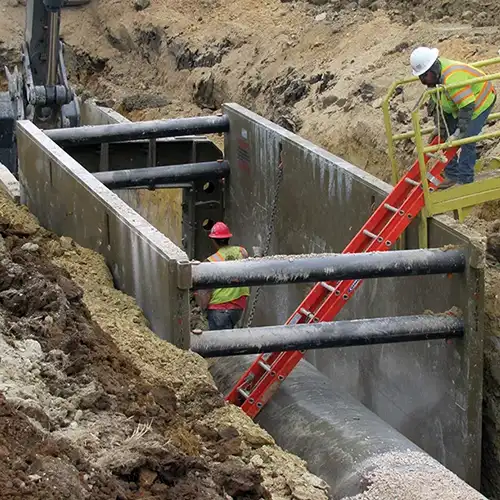
luby shoring for utilities

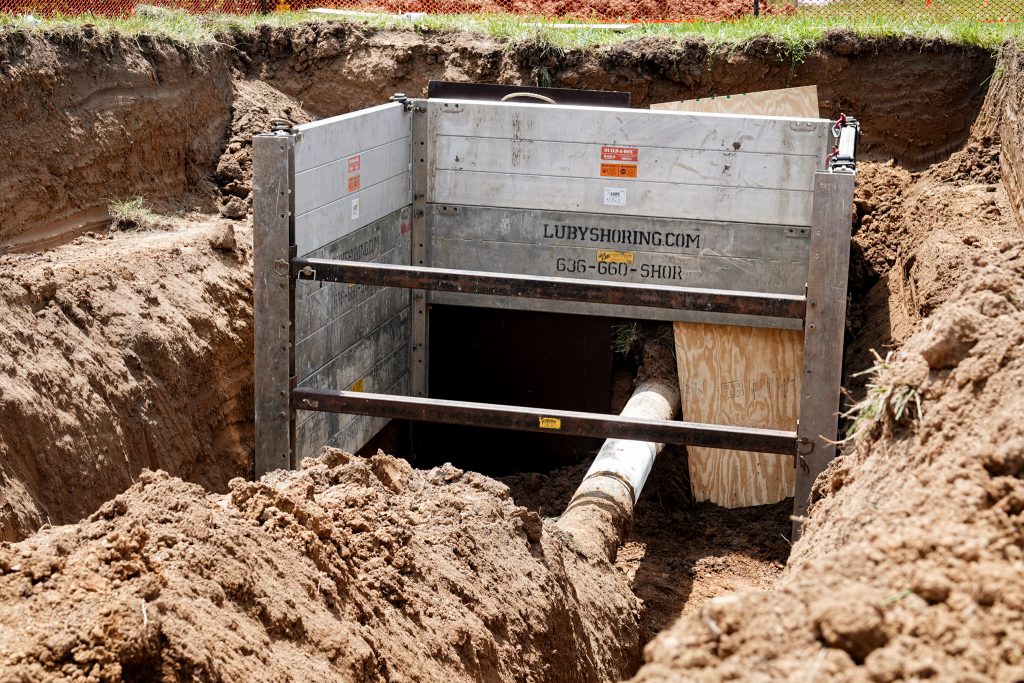
Shielding

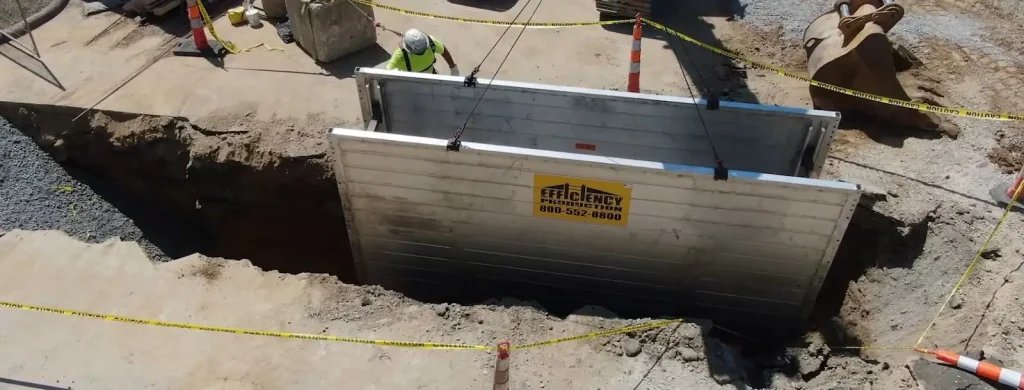
Shielding doesn’t necessarily prevent the soil from moving. Instead, it provides a protected area for workers if a collapse occurs.

Trench boxes and trench shields are common examples.
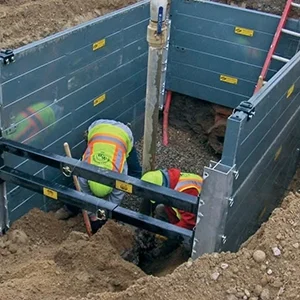
Luby Shoring Build A Box Trench System

Sloping & Benching

Instead of installing a support or shield system, contractors may be able to cut the sides of an excavation back at an approved angle.

The allowable configuration depends on factors including soil classification and site conditions.

benching with luby shoring

Don’t Forget About Soil Conditions

Not every trench behaves the same way.

Soil classification plays an important role in determining how an excavation should be protected. OSHA classifies soils into categories including Type A, Type B and Type C, with Type C representing the least stable classification.

Water, previously disturbed soil, nearby traffic, heavy equipment, vibration and other jobsite conditions can also affect an excavation.

That’s why trench safety should never be based on depth alone.

The Competent Person Matters

OSHA trenching requirements frequently reference the role of a competent person.

Before workers enter an excavation, the competent person should evaluate conditions and identify existing or predictable hazards.

Conditions can also change during the project.

Rain, water accumulation, equipment movement, vibration and changes to the excavation can all affect trench stability. An excavation that looked one way yesterday shouldn’t simply be assumed to be safe today.
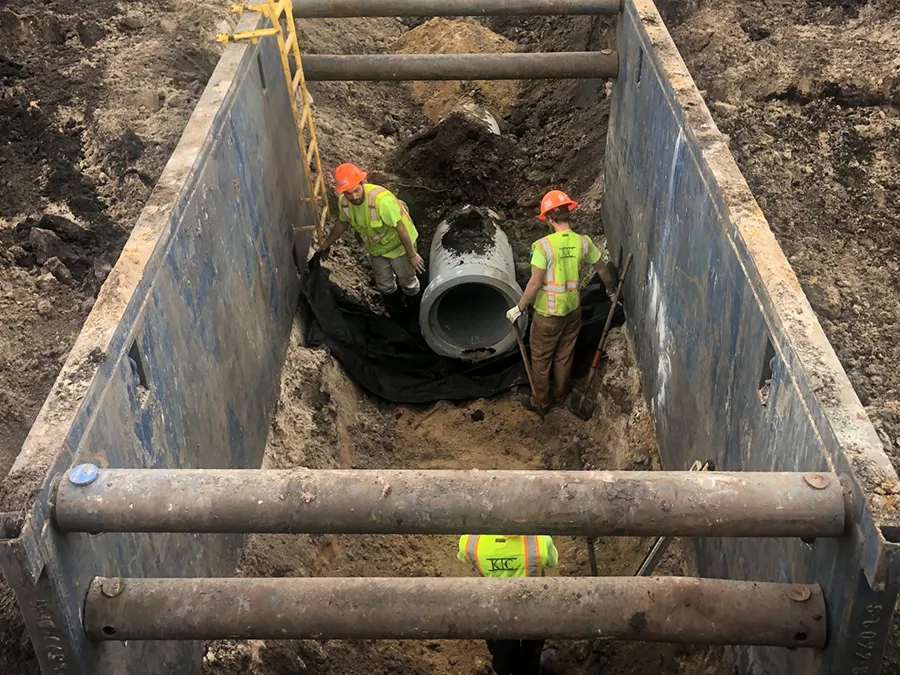
trench shielding vs trench shoring

Choosing the Right Trench Protection System

There isn’t one trench protection system that works for every excavation.

A shallow utility installation may have completely different requirements than a deep sewer project, manhole installation or excavation next to an existing structure.

Before selecting equipment, consider:

  • Excavation depth and width
  • Soil classification
  • Pipe or utility size
  • Excavator lifting capacity
  • Surrounding structures and utilities
  • Water conditions
  • Required working area inside the excavation
  • Access and egress
  • Manufacturer tabulated data
  • Whether an engineered system is required

Planning the protection system before excavation begins can help prevent delays once the job is underway

Need a Trench Box or Shoring System

Luby Shoring provides trench safety equipment and excavation support systems for contractors throughout Missouri and Illinois.

Our Fenton, Missouri location stocks over one million pounds of shoring equipment, including trench shields, street plates, slide rail systems and other trench safety equipment.

Whether you’re installing water lines, replacing sewer, working on storm drainage or planning a more complicated excavation, our team can help you determine what equipment may fit your project.

Need shoring equipment for an upcoming job? Call Luby Shoring at 636-660-7467 to discuss your excavation and equipment needs.

This article is intended as general information and is not a substitute for OSHA regulations, manufacturer tabulated data, a competent person’s evaluation or professional engineering when required.
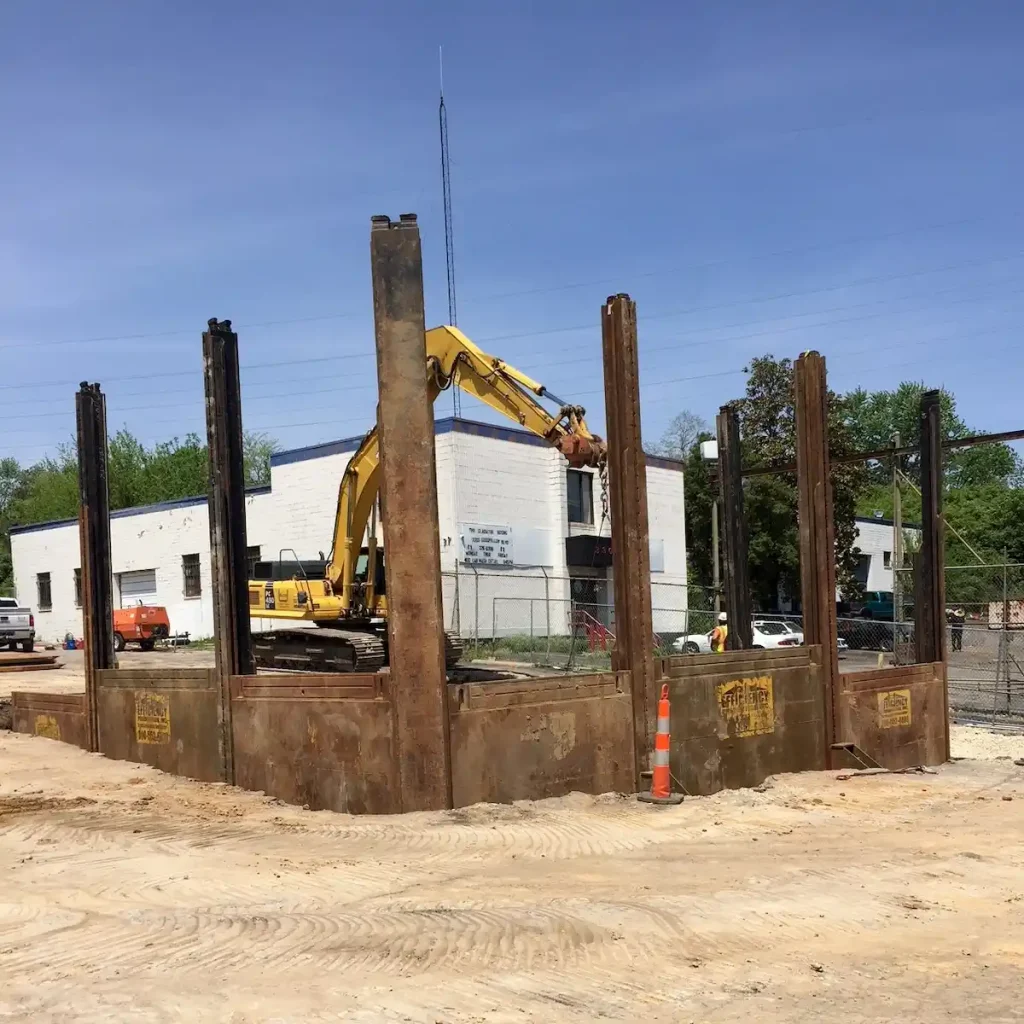
The latest technological advancements, such as smart helmets, exoskeletons, and drones, are transforming construction safety. Contact us today.

At Luby Equipment Services, construction safety is our top priority. We’re always looking for emerging technologies that can enhance worker safety. As technology evolves, so does its potential to make construction sites safer and more efficient.

Stay ahead of the curve with Luby Equipment Services, where safety and cutting-edge technology create safer worksites for everyone.

luby-shoring-gallery

Smart Helmets: Beyond the Ordinary Hard Hat

What appears to be an ordinary hard hat is now being revolutionized with intelligent technology. Smart helmets from various brands offer workers a virtual display of the job site, providing more accessible training and a quick overview of the project’s scope. These helmets can also show real-time instructions to workers, improving communication and accuracy. Additionally, they collect valuable data, helping you comply with safety regulations and streamline record-keeping.

Exoskeletons: Reducing Back Strain and Injuries

According to OSHA, back injuries account for over 600,000 workplace injuries annually, and construction work often puts significant strain on the body. Enter exoskeletons—wearable devices designed to alleviate the pressure on workers’ bodies, particularly when lifting heavy materials. By distributing the weight more evenly and supporting key muscles, exoskeletons reduce the risk of injuries, making strenuous tasks safer and less taxing on the body.

Drones: Enhancing Site Surveillance and Planning

Drones are no longer just recreational gadgets but are becoming indispensable tools on construction sites. Equipped with cameras and sensors, drones can help inspect hazardous areas of the job site that would be unsafe for workers to enter. Beyond safety, drones are also excellent for site planning and surveying, providing a birds-eye view of the project before it even begins and enabling more precise project management.

The Future of Construction Safety is Here

Technology continues to reshape the construction industry, and its role in enhancing safety and efficiency is undeniable. From intelligent helmets to exoskeletons and drones, these advancements are helping to safeguard workers and streamline operations. The tech sector will undoubtedly play a vital role in the future of construction safety, and we look forward to seeing how these innovations will continue to evolve.

Stay ahead of the curve with Luby Equipment Services, where safety and cutting-edge technology create safer worksites for everyone.

Jobsite safety with expert shoring solutions from Luby Shoring-OSHA-compliant equipment and on-site support can help protect your crew. Contact us today.

Whether you’re working on deep excavation, manhole installations, gas line repairs, or any other project requiring safe and efficient operations, Luby Shoring Services is here to help. Call us at (636) 660-7467 or fill out our online contact form to discuss how we can support your next project.

luby-shoring-gallery

Trust Our Expertise to Keep Your Jobsite Safe

At Luby Shoring Services, we are committed to providing the equipment and expertise needed to keep your team safe during every excavation project. Our high-quality shoring products and a deep understanding of OSHA regulations ensure your job is done efficiently and safely.

Safety and Compliance Solutions

When taking on a major excavation project, you have much to manage. From complying with OSHA’s strict safety regulations to securing the right equipment and ensuring your crew’s well-being, each aspect is critical. The risk of injury or fatalities is always present in construction, so safety is our top priority.

Our blog discusses these safety concerns regularly because staying informed can save lives. No shortcut on the job is worth risking the health and safety of your team. It truly matters to ensure everyone goes home safely to their loved ones.

luby-equipment-shoring-about-us

Proven Shoring Products That Save Lives

Luby Shoring Services was founded to provide construction professionals with reliable, lifesaving equipment. Since 1995, we’ve partnered with Efficiency Production, a leader in manufacturing trench shields and shoring equipment. We are confident in the durability and effectiveness of our products, which have been instrumental in preventing accidents and saving lives.

On-Site Support and Equipment Expertise

Need help determining what equipment you need for your next project? Our team is here to guide you every step of the way. We offer expert advice to help you choose the right shoring equipment tailored to your project’s needs. Our rental options are flexible and convenient; we even offer delivery to make your job easier.

For more details on our full range of products, check out our digital brochure or contact our team directly.

Contact Luby Shoring Services Today

Whether you’re working on deep excavation, manhole installations, gas line repairs, or any other project requiring safe and efficient operations, Luby Shoring Services is here to help. Call us at (636) 660-7467 or fill out our online contact form to discuss how we can support your next project.

Proper trench shoring and OSHA compliance can prevent deadly collapses and protect workers and emergency responders. Contact us today.

At Luby Equipment Services, we’re here to help you start every job safely and ensure compliance with all OSHA regulations. By recommending the right tools and equipment, we guarantee your projects are completed efficiently and securely, with minimal risk to your team.

For more information or expert advice, visit our website or call 636-660-SHOR. Keep your team safe, and let’s prevent the next tragedy before it happens.

luby shoring st.louis

The Tragic Reality of Trench Collapses

It’s a tragic reality in the construction industry: trench collapses due to shortcuts or insufficient shoring equipment. Despite regular news coverage of these incidents—often resulting in severe injury or death—many construction companies still fail to comply with OSHA regulations for trench safety.

The Risk to Emergency Responders

When a trench collapses, the first call is to emergency personnel, such as firefighters, who risk their own lives to rescue those trapped. Alarmingly, trench-related accidents have a mortality rate 2.5 times higher than other construction events, according to FireChief.com. Not only do these situations endanger workers, but rescuers also face severe injury or even death.

OSHA Guidelines for Trench Safety and Rescue Operations

OSHA has strict guidelines for both trench digging and rescue operations. Like construction companies, fire departments must adhere to these standards or face penalties. Yet, the best way to prevent these dangerous rescue situations is to use proper shoring equipment and follow safety guidelines from the beginning of a project. This proactive approach reduces risk, saves lives, and keeps workers out of harm’s way.

Partnering with Luby Equipment Services for Safer Jobsites

At Luby Equipment Services, we’re here to help you start every job safely and ensure compliance with all OSHA regulations. By recommending the right tools and equipment, we guarantee your projects are completed efficiently and securely, with minimal risk to your team.

For more information or expert advice, call 636-660-SHOR. Keep your team safe, and let’s prevent the next tragedy before it happens.

Excavation work, while essential for various construction projects, poses significant risks, particularly concerning trench safety. Trench collapses can occur suddenly and with devastating consequences. Implementing proper shoring techniques is critical to ensure the safety of workers and prevent accidents. In this blog post, we’ll delve into essential shoring trench safety best practices to protect lives underground.

Luby Trench Shoring Box

Conduct Site Assessments:

Before any excavation work, including trenching operations, it’s crucial to conduct thorough site assessments. This involves evaluating factors such as soil type, depth of excavation, and proximity to existing structures or utilities. Luby Shoring Services and Rental emphasizes the importance of these assessments to identify potential hazards and determine the appropriate shoring methods required for the project.

Select the Right Shoring System:

Choosing the correct shoring system is essential for ensuring safety and stability in trenching projects. Luby Shoring Services and Rental offers a range of shoring solutions, including trench shields, spreaders, manhole shields, slide rail systems, and bedding material containers, each tailored to specific trench conditions and soil characteristics. Our team assists in selecting the most suitable system to provide support and minimize risks during excavation.

Luby Shoring Proper Installation and MaintenanceProper Installation and Maintenance:

Proper installation of shoring systems is essential to their effectiveness and the safety of workers. Luby Shoring Services and Rental ensures that all shoring equipment is installed correctly by trained professionals, adhering to manufacturer guidelines and industry standards. Regular inspections and maintenance checks are conducted to identify any signs of damage, ensuring the integrity of the shoring equipment throughout the project.

Implement Protective Measures:

In addition to shoring systems, implementing additional protective measures is crucial to enhance safety on the job site. Luby Shoring Services and Rental recommends using trench shields, barricades, warning signs, and other safety equipment to prevent unauthorized access and minimize the risk of accidents. Adequate ventilation and monitoring are also emphasized, particularly in confined spaces, to maintain a safe working environment.

Provide Ongoing Training and Supervision:

Equip workers with comprehensive training on trench safety protocols, including proper shoring techniques, emergency procedures, and hazard recognition. Supervisors should closely monitor excavation activities to ensure compliance with safety regulations and address any safety concerns promptly.

Maintain Clear Communication:

Establish clear communication channels among all personnel involved in the excavation project, including workers, supervisors, and subcontractors. Regular safety meetings and toolbox talks can help reinforce safety practices and address any issues or questions related to trench shoring and safety.

Respond to Changing Conditions:

Luby Shoring Services and Rental understands that excavation conditions can change unexpectedly. We see the importance of being prepared to adapt shoring methods and safety measures accordingly. Always be ready to respond to unforeseen changes in soil stability, weather conditions, or nearby activities, ensuring continued safety and effectiveness throughout the project.

Let Luby Shoring Services and Rental help keep your workers safe! Call us at (636) 660-7467.

Whenever weather conditions change in the slightest, the CP should be inspecting the soil for changes.

trenching and shoring protection for your crew

Summer rains can create several challenges when it comes to building a trench and then maintaining trench safety. A cave-in can happen in a matter of seconds, seriously injuring, even killing, a worker. Therefore, it is critical to know how to handle the extra moisture in order to keep your crew safe this summer.

Understanding the Dangers of Trenching and Excavation

OSHA states that trenching and excavation are among the most hazardous construction operations. Cave-ins pose the greatest risk as they result in more worker fatalities than any other type of excavation-related accident. Dozens of workers die each year as a result of cave-ins.

The U.S. Bureau of Labor Statistics shows that there were 36 excavation or trenching cave-in deaths in the U.S. in 2016. The majority of these injuries occurred in the construction industry. It’s important for workers to understand that any excavation has the potential to cause serious injury or fatality. Systems must be in place to prevent accidents such a cave-ins. Once in place, these precautions must be carried out consistently.

The Job of the Competent Person

Wet weather can quickly change what’s safe and what is not. When it rains, the water can make the sides of the trench less stable. OSHA requires that trenches must be inspected daily and as conditions change by a CP (competent person). This person is one who is capable of identifying existing problems and also predicting potential problems.

The CP will ensure that the crew is using their protective systems and that they are set up correctly. They will make sure that workers aren’t taking chances, that the ladders are set up properly, and that everything else that goes along with keeping the trench safe is in place before a worker enters it.

According to OSHA 1926.651(h)(1), employees are not allowed to work in excavations in which there is accumulated water, or in excavations in which water is accumulating, until the CP inspects the excavation and stabilizes the trench somehow. Using a trench box is the quickest and easiest way to support a trench wall. Also, the CP needs to take action to remove the water, such as using a pump. If a pump is used, the CP has to make sure it is working properly.

Finally, Inspect! Inspect! Inspect! Whenever weather conditions change in the slightest, the CP should be inspecting the soil for changes. It could alter the protective system that is used, such as if a contractor is using hydraulic shores and water makes the trench walls unstable, shores cannot be used. If a contractor is sloping a trench, as soon as water gets into the trench, the angle of the slope needs to be flattened.

Additional Safety Tips

Other general trenching and excavation rules stated by OSHA include:

  • Keep heavy equipment away from the edges of the trench
  • Do not work under raised loads
  • Determine where underground utilities are located
  • Keep surcharge loads at least 2 feet away from the edges of the trench
  • Test the area for hazardous fumes, toxic gases, and low oxygen
  • Inspect trenches at the start of each shift
  • Inspect the trench after heavy rainfall

St. Louis Trenching and Excavation

At Luby Shoring Services, we are experts in trench shoring and excavation projects. We have the expertise to work with you on site specific engineering services. We can quickly complete any job while meeting OSHA safety regulations.

In addition, we provide a wide selection of standard and custom trench shielding and shoring options. Our equipment is cost effective, safe and versatile, relied upon by underground utility professionals, municipalities and private contractors. All products are Professional Engineer certified to help you meet OSHA’s excavation and trench safety standards.

Let Luby Shoring Services help keep your workers safe this summer! Call us at (636) 660-7467.

Build-A-Box™ is a modular aluminum trench shield system that is hand assembled and easily transportable.

Every job and jobsite are different. However, two things that are always a priority, no matter the situation, are safety and cost. First, you must protect your workers, their safety is of the upmost importance. Second, the job needs to be cost-effective.

build-a-box-st-louis

Build-A-Box™ modular aluminum trench shielding system may be the right fit for your jobsite, ensuring both the safety of your crew and the cost-effectiveness of your job.

Build-A-Box™ Uses and Features

Build-A-Box™ has a number of uses and features that make it suitable for many jobs. Not only is the system easily transportable but it is also easily assembled. In addition, it is compatible with XLAP aluminum shields. Build-A-Box’s flexibility makes it an indispensable tool for small cable and utility projects, municipal maintenance, manhole installation or for troubleshooting applications.

Some additional features of Build-A-Box™ include:

  • Narrow sidewalls
  • Tongue and groove design
  • Exclusive corner end posts
  • Foam filled
  • Ultra-light double wall aluminum
  • Stackable with XLAP
  • Professional engineer design and depth certification
  • Heavy duty adjustable strut
  • Fast and easy hand assembly
  • Pick-Up truck transportable
  • Lightweight

It can be assembled into 2, 3, or 4-sided shielding configurations. If more complex configurations are required, Build-A-Box™ can be designed for special use projects. Also, it is designed to be used with adjustable arch spreaders. Finally, changes can be made on the spot to adjust to any job with light to extreme conditions.

Fast and Easy Hand Assembly

Another feature is its ease of assembly. Most of the panels can be handled by one person. The complete unit stacks flat, which minimizes storage and transportation issues. Each panel is pinned to corner posts and they are stacked to a desired height. Its versatility allows for T-connections and the optional barrier posts increase safety for your crew.

Luby Shoring Services in St. Louis

At Luby Shoring, we provide a wide selection of standard and custom trench shielding and shoring options. Our equipment is cost effective, safe and versatile, relied upon by underground utility professionals, municipalities and private contractors. All products are Professional Engineer certified to help you meet OSHA’s excavation and trench safety standards.

We can help you decide if the Build-A-Box™ modular aluminum trench shielding system is right for your job. Call us today at (636) 660-7467 or fill out our online contact form.

Working on manhole projects can be an aggravating. However, using a manhole shield can help solve many of the problems that come up when working on this type of trench project.

For instance, when a sewer pipe needs to be installed, a manhole will need to be dug, and the pipe needs to be able to pass through it easily. For it to correctly installed, any type of trench shielding needs to be wider than a standard pipe. As a result, there tends to be a lot of exposed trench at the end of the “trench box.”

This is where a Manhole Shield is perfect for certain applications, such as pipe taps, point repairs, point inspections, and junction box installations.

manhole-shields-st-louis

The Benefits of Manhole Shields

Simply put, manhole shields help maintain a safe working environment for workers. It provides safety in a number of ways. For instance, it is specifically designed to offer protection on the third and fourth sides of a trench or excavation.

Another way in which manhole shields are beneficial is that they protect the worker while he is working on the project. Working in any kind of trench is accompanied by the risk of injury, as a dangerous situation can easily come up. Pipework can be a dangerous task, but fitting a manhole shield around the work area is an easy way to avoid accidents and injuries.

Uses of Manhole Shields

Manhole shields are designed to be used in two, three, or four sided configurations with an independent spreader system. They are specially designed for tie-ins, manhole installations, and repair work. In addition, they are available in 4′, 6′, and 8′ heights and either come with solid sides or cut outs at the bottom. For unique applications, they can be stacked in combination with Flex-Shield boxes.

Custom Trench Shielding and Shoring Equipment

At Luby Shoring, we provide a wide selection of standard and custom trench shielding and shoring options. Our equipment is cost effective, safe and versatile, relied upon by underground utility professionals, municipalities and private contractors. All of our products are Professional Engineer certified to help you meet OSHA’s excavation and trench safety standards.

Call us today at (636) 660-7467 or fill out our contact form for further information.