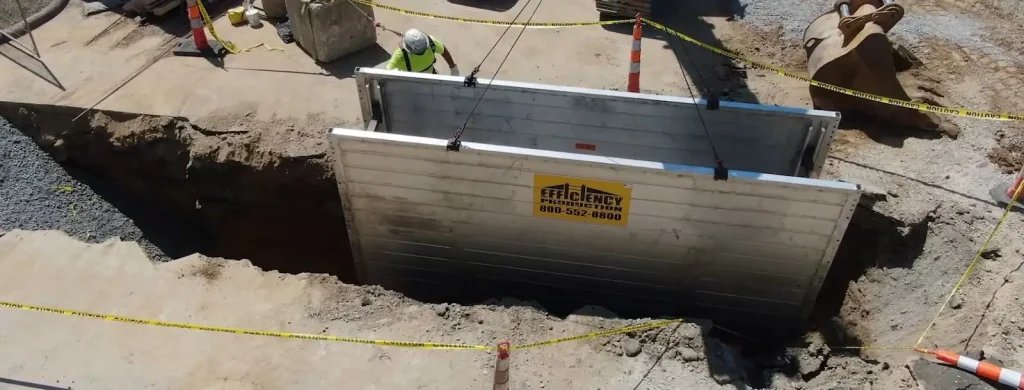
If you’re digging a trench, one of the most important questions to answer before anyone gets in the ground is simple: When is trench shoring actually required?
The answer depends on trench depth, soil conditions, the jobsite and the protective system being used. OSHA has specific requirements for trenching and excavation designed to protect workers from cave-ins, one of the biggest hazards associated with trench work.
Here’s what contractors need to know.
The 5-Foot Rule for Trench Protection
One of the easiest numbers to remember is 5 feet.
According to OSHA, employees working in an excavation 5 feet deep or greater generally must be protected from cave-ins by an adequate protective system.
There are exceptions, including excavations made entirely in stable rock.
What about a trench that’s less than 5 feet deep?
That doesn’t automatically mean it’s safe. A competent person still needs to examine the excavation and determine whether there is a potential for a cave-in.
In other words, depth is important, but it isn’t the only thing that matters.
What Happens When a Trench Is More Than 20 Feet Deep?
Once an excavation goes beyond 20 feet, additional requirements come into play.
Protective systems for excavations deeper than 20 feet must be designed by a registered professional engineer or based on data prepared or approved by a registered professional engineer.
This is where planning ahead becomes especially important. Deep excavations can require engineered shoring solutions based on the depth, soil, surrounding structures, utilities and other jobsite conditions.
Shoring vs. Shielding vs. Sloping
Shoring
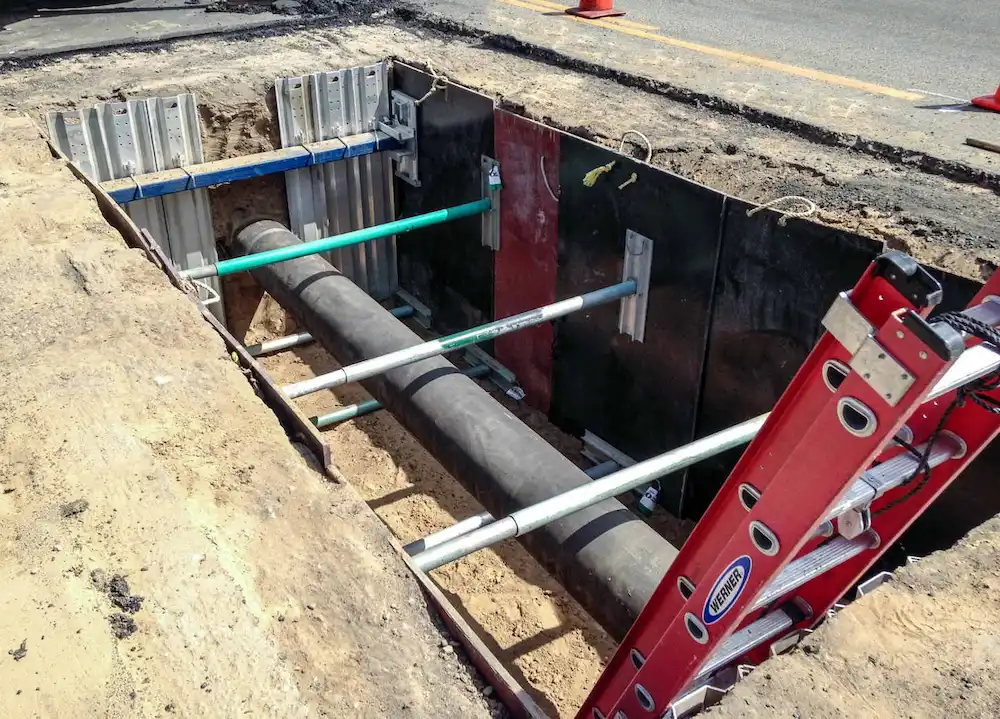
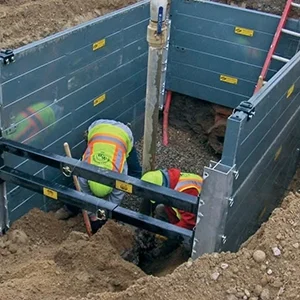
A shoring system supports the sides of an excavation to help prevent a cave-in.
Depending on the application, contractors may use hydraulic shoring, slide rail systems or other engineered shoring systems.
Shielding
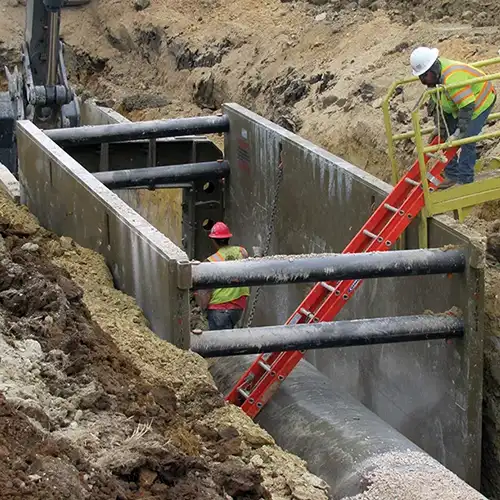
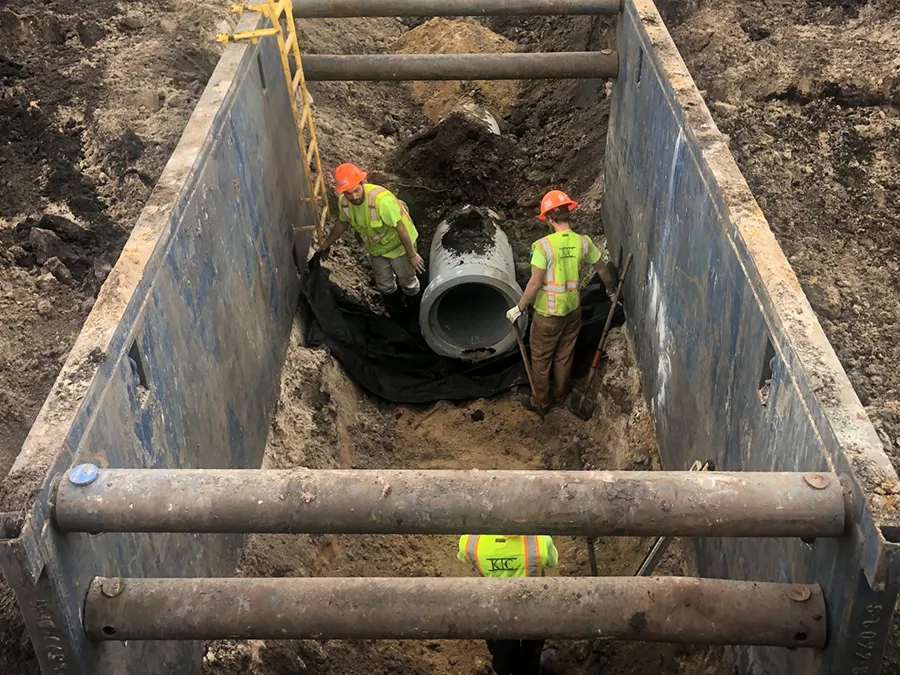
Shielding doesn’t necessarily prevent the soil from moving. Instead, it provides a protected area for workers if a collapse occurs.
Trench boxes and trench shields are common examples.
Sloping & Benching
Instead of installing a support or shield system, contractors may be able to cut the sides of an excavation back at an approved angle.
The allowable configuration depends on factors including soil classification and site conditions.

Don’t Forget About Soil Conditions
Not every trench behaves the same way.
Soil classification plays an important role in determining how an excavation should be protected. OSHA classifies soils into categories including Type A, Type B and Type C, with Type C representing the least stable classification.
Water, previously disturbed soil, nearby traffic, heavy equipment, vibration and other jobsite conditions can also affect an excavation.
That’s why trench safety should never be based on depth alone.
The Competent Person Matters
OSHA trenching requirements frequently reference the role of a competent person.
Before workers enter an excavation, the competent person should evaluate conditions and identify existing or predictable hazards.
Conditions can also change during the project.
Rain, water accumulation, equipment movement, vibration and changes to the excavation can all affect trench stability. An excavation that looked one way yesterday shouldn’t simply be assumed to be safe today.
Choosing the Right Trench Protection System
There isn’t one trench protection system that works for every excavation.
A shallow utility installation may have completely different requirements than a deep sewer project, manhole installation or excavation next to an existing structure.
Before selecting equipment, consider:
- Excavation depth and width
- Soil classification
- Pipe or utility size
- Excavator lifting capacity
- Surrounding structures and utilities
- Water conditions
- Required working area inside the excavation
- Access and egress
- Manufacturer tabulated data
- Whether an engineered system is required
Planning the protection system before excavation begins can help prevent delays once the job is underway
Need a Trench Box or Shoring System
Luby Shoring provides trench safety equipment and excavation support systems for contractors throughout Missouri and Illinois.
Our Fenton, Missouri location stocks over one million pounds of shoring equipment, including trench shields, street plates, slide rail systems and other trench safety equipment.
Whether you’re installing water lines, replacing sewer, working on storm drainage or planning a more complicated excavation, our team can help you determine what equipment may fit your project.
Need shoring equipment for an upcoming job? Call Luby Shoring at 636-660-7467 to discuss your excavation and equipment needs.
This article is intended as general information and is not a substitute for OSHA regulations, manufacturer tabulated data, a competent person’s evaluation or professional engineering when required.