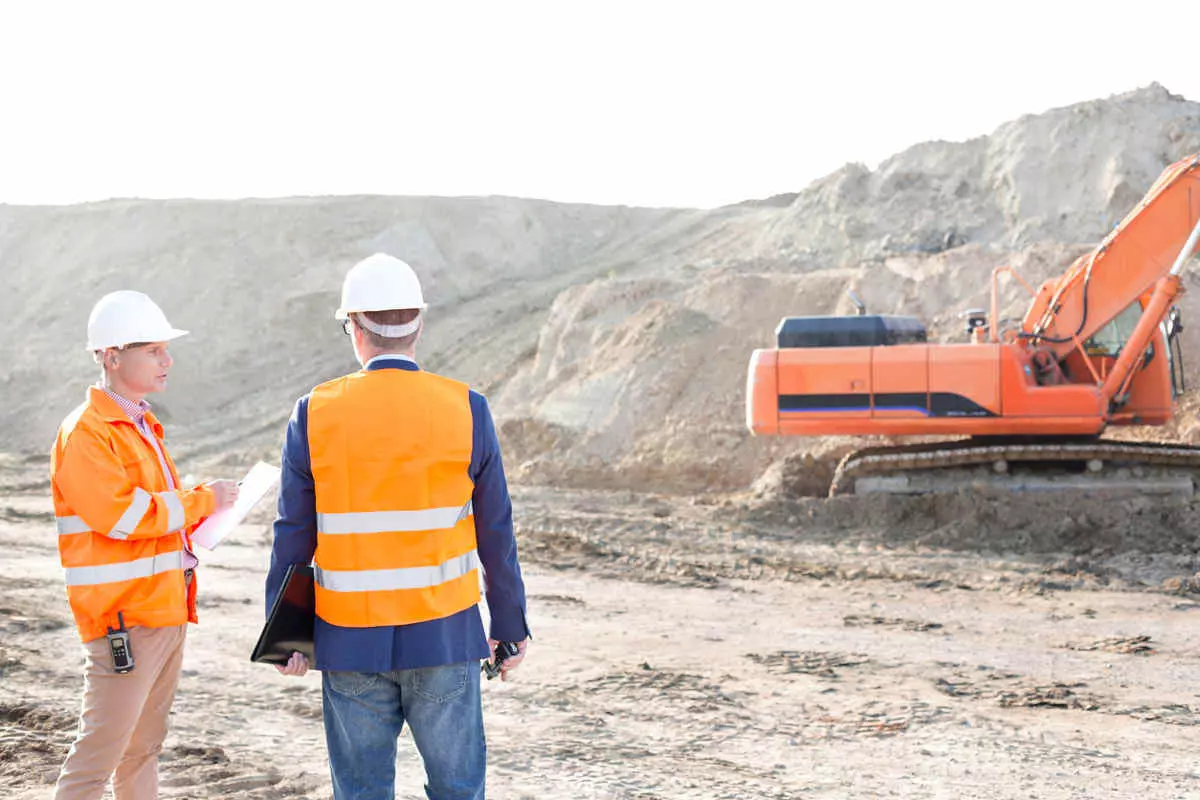
There are a number reasons why shoring is important; employee safety is at the top.

When you think of trenches, you may imagine a bunch of soldiers huddled together but that’s not the only thing trenches are used for. Trenches are actually used much more frequently in construction. In construction, the excavation of earth is a common occurrence, and for many different purposes. Whatever the purpose however, when there is a hole in the earth that is deeper than it is wide, that is classified as a trench.

Trenches are very prone to collapse though, and because of this they need to be stabilized with trench shoring. Trench shoring is material that is used to support a trench so that it doesn’t collapse, and it is very important to the safety of any workers that will be moving around in the trench. Let’s take a look at 5 different reasons why trench shoring is so incredibly important when working with or in trenches.

1. Safety

This is the number one reasons why trench shoring is important. As stated above, trenches are prone to collapse and if a trench happens to collapse while workers are inside, lives can very easily be lost. Depending on how big the trench is, being stuck in a trench collapse could be compared to be buried up to your waist in sand at the beach, or being buried alive by a mudslide or an avalanche. Both are traumatizing and could cause great bodily harm to workers. If you can’t think of any other reason why you should use trench shoring, this one stands alone on its own merit.

2. Time Saved

If a trench collapses, even if nobody is in it it’s still going to cause major problems. The trench will have to be re-dug out, costing you time and money that you don’t have. Trench shoring will prevent your project from being sidetracked.

3. Peace of Mind

Your workers will not be able to work efficiently and quickly if they are constantly worried about their trench collapsing. They might make mistakes and be on edge without the proper support around them.

4. Financial Safety

If a trench collapses, not only will it cost you money to re-dig it and repair or replace anything that was damaged, but if it happens to collapse on your workers, you could be facing lawsuits if they are injured.

5. Future Use

If you are a company that digs lots of trenches, you might be able to make use of your trench boxes over and over again if you buy them. This will save you money in the long term and ensure that you never have to go without trench shoring.

St. Louis Trench Shoring

Trench shoring is incredibly important for many different reasons. If you want your workers to be safe, and avoid costly repairs and wasted time, you need to use trench shoring anytime you have people working in trenches. Not only will it save you time and money, but more importantly it will save your employees lives.

When it comes to excavating projects, rely on Luby Shoring’s expertise. We’ll help you complete any job quickly, while meeting OSHA safety regulations. We have a wide range of options available for fast delivery, and our team will provide options for the correct equipment to use with your job. Call us today at (636) 660-7467 or fill out our online contact form.

Having a competent person on an excavation site helps ensure employee safety at all times.

OSHA Competent Person

When a company requires excavation work on a job site, OSHA mandates that a competent person be there to ensure that the requirements for the OSHA standard are being met. This is necessary to ensure employee safety.

What is a Competent Person?

According to OSHA, a competent person is “one who is capable of identifying existing and predictable hazards in the surroundings or working conditions which are unsanitary, hazardous, or dangerous to employees, and who has authorization to take prompt corrective measures to eliminate them.” (29 CFR 1926.32(f))

This designated person has the responsibility to inspect the trenches and adjacent areas daily, or as conditions change. They need to be able to identify existing issues and predictable hazards. Once identified, the competent person is then able to take corrective measures to control or eliminate these hazardous conditions.

Therefore, the competent person must have very specific training and be knowledgeable about the correct use of protective systems, soil analysis, and the requirements of all trench safety standards. The training course is intended for employees that have the responsibility for ensuring healthy, safe, and sanitary working conditions such as construction supervisors or managers. 

Competent Person Training Course

In order to qualify as a competent person, a trainee must complete the OSHA 30 Hour Construction Training Course. It is handled by an authorized Outreach Trainer and is conducted over the course of 4 consecutive days. Each participant is given their own copy of the OSHA CFR 1926 Construction Standards.

There are a wide variety of topics covered in this 30 hour training course. Some of these topics include, but are not limited to:

  • OSHA requirements for a competent person
  • Competent person responsibilities
  • General requirements for inspections and safety training
  • Health hazards associated with construction work
  • State OSHA programs
  • Fire protection and prevention
  • Material handling, storage and disposal
  • Electrical safety
  • Fall protection for construction
  • Scaffolding on construction sites
  • Trenching and excavation
  • Masonry and concrete construction
  • Demolition work
  • Welding and cutting requirements
  • Power and hand tool use
  • Structural steel construction

Once the course is successfully completed, the trainee will receive an OSHA 30 Hour Construction Training card to place in their wallet. In addition, they will receive a personalized certificate showing that they completed and passed the course.

Rely on Our Expertise to Stay Safe

On major excavation projects there is a lot to think about: OSHA regulations, having the right equipment, and keeping the crew safe. Luby Shoring Services was founded with the goal of providing a wide range of equipment options to get the job done in the most effective and safest way possible. We are confident in our shoring products and know that the workers are safe.

Whether your next job is manhole installations, deep excavation work, horizontal drilling, or any other shoring job, call Luby Shoring Services today at (636) 660-7467 or fill out our online contact form.

Save

Save

Save

Save

It’s important to regularly review the safety regulations that apply to you and your crew.

St. Louis ShoringConstruction crews have to be extremely mindful of OSHA regulations in order to avoid safety violations and fines. We all know that, right? Well, it turns out, it might be a little more complex than it may seem.


As this article from Equipment World illustrates, even though the crew pictured in the article is displaying trench safety that leaves a lot to be desired, they are “technically” not violating OSHA regulations. That’s because they’re city employees, and in this case, their safety regulations are set by a state-run agency.

Depending on the state, safety regulations and fines could be handled by OSHA or state plans, and the strictness of these regulations will vary between the states as well. However, the goal is the same no matter who is setting the guidelines. According to OSHA, “State Plans must set workplace safety and health standards that are ‘at least as effective as’ as OSHA standards. Many State Plans adopt standards identical to OSHA.”

Just because your crew may not be directly regulated by OSHA doesn’t mean you can cut corners or expect lower fines. In some cases, state regulatory bodies can be more strict and issue higher fines than OSHA. As a contractor, it’s important to regularly review the safety regulations that apply to you and your crew.

If you have questions about which shoring equipment is necessary to comply with regulations, contact us at Luby Shoring Services. We’re happy to provide site-specific engineering services and shoring solutions that will keep you on the right side of the regulating body that governs you and that keeps you and your crew safe on the job.

Save

We want to help you improve your job site with the right shoring equipment.

Shoring Equipment St. Louis

Whether you’re part of a new company that’s just starting to acquire their own equipment, or you’re a contractor who doesn’t often utilize shoring and trench shielding equipment for your jobs, not everyone has access to this specialized equipment. It is an investment that takes some time to budget for, and even then, it’s unlikely that you will have everything on hand that you might need to complete your job safely. Luckily, there are convenient rental options out there that can make finishing your job a breeze.

Shoring Equipment Rental Options

At Luby Shoring Services, we want to help you improve your job site with the right equipment. Your crew will be safer when you use steel or aluminum double wall trench shields, the Build-A-Box™ modular aluminum trench shielding system, manhole shields, Stone Mizer, Hydraulic shores, and last but not least, our slide rail systems.

When you use our equipment, you can have peace of mind knowing that they are Professional Engineer certified to help you ensure you’re following all of OSHA’s excavation and trench safety guidelines. Our equipment is trusted by professionals, from underground utility professionals to municipalities to private contractors.

If you decide that a piece of equipment is worth keeping, we can make that happen. All of our rental equipment is for sale at a reasonable price. Like our rental equipment, we can deliver it to you quickly and reliably. Simply call us at (636) 660-7467 (SHORE) or visit our website for more information.

Save

Save

19334118 - construction helmet question markIf you’ve gone through competent person training, you likely have heard about the different categories that OSHA has come up with to classify soil on the job site. The competent person is responsible for assessing the soil and determining which trench protective system to use and how to use it in order to make the excavation site safe.

OSHA categorizes soil into four different types:

  • The first category is stable rock. OSHA defines stable rock as “natural solid mineral matter that can be excavated with vertical sides and remain intact while exposed.”
  • Type A soils are “cohesive soils with an unconfined compressive strength of 1.5 tons per square foot (tsf) (144 kPa) or greater” which include “clay, silty clay, sandy clay, clay loam and, in some cases, silty clay loam and sandy clay loam.”
  • Type B soils are “cohesive soils with an unconfined compressive strength greater than 0.5 tsf (48 kPa) but less than 1.5 tsf (144 kPa)” and can include “angular gravel, silt, silt loam, previously disturbed soils unless otherwise classified as Type C, soils that meet the unconfined compressive strength or cementation requirements of Type A soils but are fissured or subject to vibration, dry unstable rock, and layered systems sloping into the trench at a slope less than 4H:1V (only if the material would be classified as a Type B soil).”
  • The final classification is type C soils, which are defined by OSHA as “cohesive soils with an unconfined compressive strength of 0.5 tsf (48 kPa) or less” and include “granular soils such as gravel, sand and loamy sand, submerged soil, soil from which water is freely seeping, and submerged rock that is not stable. Also included in this classification is material in a sloped, layered system where the layers dip into the excavation or have a slope of four horizontal to one vertical (4H:1V) or greater.”

This blog just serves as a brief overview of the soil classifications as laid out by the Occupational Safety and Health Administration. For a more extensive breakdown of the different soil classifications, you can visit the OSHA website or attend one of our Competent Person Training class, which is held every month at our headquarters.

Need help deciding which trench protection to choose for the work site conditions you may encounter? Luby Shoring Services can help. Just give us a call at 636-660-7467.

14212673 - two construction worker at the siteAs a contractor, you are well aware of the fact that your workers have rights, and you do everything you can to make sure they are safe, content, and productive on the job. OSHA, the administration responsible for making sure working men and women have access to safe working conditions, has compiled a list of worker’s rights that are required for every job. You can find a list under the Know Your Rights column on the OSHA website.

In addition to being able to count on a workplace that’s free of any health and safety hazards, workers also have the right to question unsafe situations without fear of retribution. This means, they must be able to weigh in on potential issues without having to worry about disciplinary action or losing their job. In fact, workers are encouraged to file confidential complaints with the Occupational Safety and Health Administration, who will determine if an off-site investigation or an on-site inspection needs to occur.

If an on-site inspection does take place, workers have the right to a private meeting with the OSHA inspector before and after the inspection. In fact, if there is no union in place, the inspector is required to have confidential meetings with a reasonable number of workers as part of the investigation.

The best way to avoid any of these issues is to do everything in your power to understand and prioritize your worker’s rights. Frequently review OSHA regulations that are pertinent to your workplace, and allow your workers to come to you with concerns (and ideally, solutions to problems they encounter).

We’re here to make sure you have the right equipment for every job, but that’s only one piece of the puzzle. Monitoring the guidelines and taking the appropriate steps to ensuring your workers are safe, healthy, and happy on the job is one of the most important parts of your job as a boss.

Did you know National EMS Week is celebrated every year during the third week of May? Since that’s right around the corner, we wanted to take a moment on our blog and shine a spotlight on EMS practitioners and showcase why they are so crucial to the construction industry.

As you know from reading the news stories or following our blog and social media pages, there are many trench shoring incidents that happen all over the country on almost a weekly basis. Sadly, many of these collapses and other incidents could have been prevented with proper training and equipment. Nevertheless, when an accident occurs on the job site, the first people to the scene are the local EMS professionals.

This is such a prevalent part of their job that many cities conduct regular trench training exercises, like this one held in Adrian, Michigan a few weeks ago. According to Adrian Fire Capt. Nick Moorehead, the training is important because it “gives us the opportunity to learn every part of this type of rescue, so we can be better prepared.”

The brave men and women that choose to go into this often dangerous career truly deserve all the recognition we can give. They have a tough job which requires specific training in a multitude of areas. It is our job as contractors to ensure our crew makes safe decisions on the job site so we never have to ask EMS crews to risk their lives to save our own. By staying educated on relevant OSHA regulations, using proper equipment on every job, and making sure there’s a trained competent person on each job, we keep our local EMS professionals out of harm’s way.

If you’ve ever relied on your area EMS practitioners, this is the time to reach out and thank them again for their service. Let’s face it, not many of us could do the work they do every day, and they deserve our respect. Stay safe out there!

Everyone has heard the phases “shop small” and “shop local” and the concept behind this urging makes total sense. If you are able, isn’t it better to support people that actually live in your community versus a large corporation who might not be able to pinpoint your town on a map? Most people would agree that there’s value in it, but what can you gain from working with a local company like ours?

Whether we’ve worked together in the past, or you’ve been waiting to see if we’d be a good fit for an upcoming project, we want to share the three top benefits you receive when you partner with Luby Shoring Services:

  1. Experience – Luby Shoring was established in 2015, but before that, Owner Steve Luby worked for his family’s business (Luby Equipment Services) which opened its doors in the mid-1990′s. Luby Shoring Services’ trench shields and shoring equipment is manufactured by Efficiency Production, a company that was founded in 1971. They were the first company to commercially manufacture a modular trench box. Today, Luby Shoring Services has 70 years’ worth of experience among our staff. The knowledge our experts bring to your project is priceless.
  2. Locally-owned – Our headquarters are in Fenton, Missouri and we are committed to serving our local community. We believe in keeping the money in our local economy. When you work with us, you’re investing in a brighter future for the place you call home.
  3. Safety Experts – Trench shoring is the only way to ensure your workers stay safe on the job site. We are on top of every OSHA regulation, and we offer training classes year-round to help educate contractors and their crews. We see the news stories every day of people losing their lives in trench accidents and we are obsessed with making sure everyone we work with is safe while they work.

Want to find out more about what we do? Give us a call at 636-660-7467 or contact us via our website. We look forward to working together!