
Trench shoring is a procedure that braces the walls of a trench to prevent collapse and protects workers.

Trench Shoring St. Louis

Trenching and excavation are some of the most hazardous occupations. A number of workers get injured every year while performing their jobs. So it is imperative to have a protective system to ensure the safety of trench workers.

The competent person is responsible for deciding and implementing the protective measures. He has the ability and experience needed to identify the potential and existing dangers at the site. He is expected to choose the protective system on the basis of the type of soil and the depth and width of the trench.

The Dangers Involved in Trenching

The earthen walls of a trench can collapse and injure the workers inside. This is the most important danger faced by the employees who work on an excavation site. Besides this, the workers can get injured in other ways. If the work site is cluttered the workers can slip and fall. They can get a shock from the underground or overhead electrical lines.

They have to work in the proximity of high traffic and utilities and manually handle material and heavy machinery. All of this can be dangerous.

Different Protective Systems

  • Shoring – In this, the sides of an excavation are supported by posts, struts, wales and sheeting made of timber, and hydraulic or mechanical structures. This method is suitable for providing protection in excavations where sloping is not practical because of the depth or location of the trench. Shoring provides even pressure. The workers do not have to enter the trench to install it.
  • Shielding – Shielding involves the use of a trench box or shield. It does not avert a cave-in. Instead of this, it protects the workers from harm if there is a cave-in. This protective system is useful for a continuous installation work like laying pipes. The workers can drag the box with them wherever they work.
  • Sloping – This is a protective system in which the earthen walls of an excavation are cut back at an angle to avert a cave-in.
  • Benching – In this method, the walls of the excavation are cut into steps to prevent a cave-in and provide protection to the workers.

Advantages of Shoring and Shielding

Sloping and benching are not practical for most of the excavations. A large amount of space is needed to dig the trench at the correct angle. Often this is not possible because the excavations have to be done in busy areas where there is a lot of traffic.

Another reason why they are not very suitable is that towards the end the soil which has been removed has to be put back and compacted, this costs extra money and time.

Shoring and shielding are more advantageous. They are more economical than sloping and benching. They maintain the trench walls in a vertical position. This reduces the quantity of excavated soil and fuel consumption. It also makes the work of restoring the yards, asphalt and pavement easier.

St. Louis Trench Shoring

If you have any questions regarding trench shoring, call Luby Shoring Services today at (636) 660-7467 or fill out our online contact form.

Luby Shoring Services has the expertise to work with you on site specific engineering services. We can quickly complete any job while meeting OSHA safety regulations.

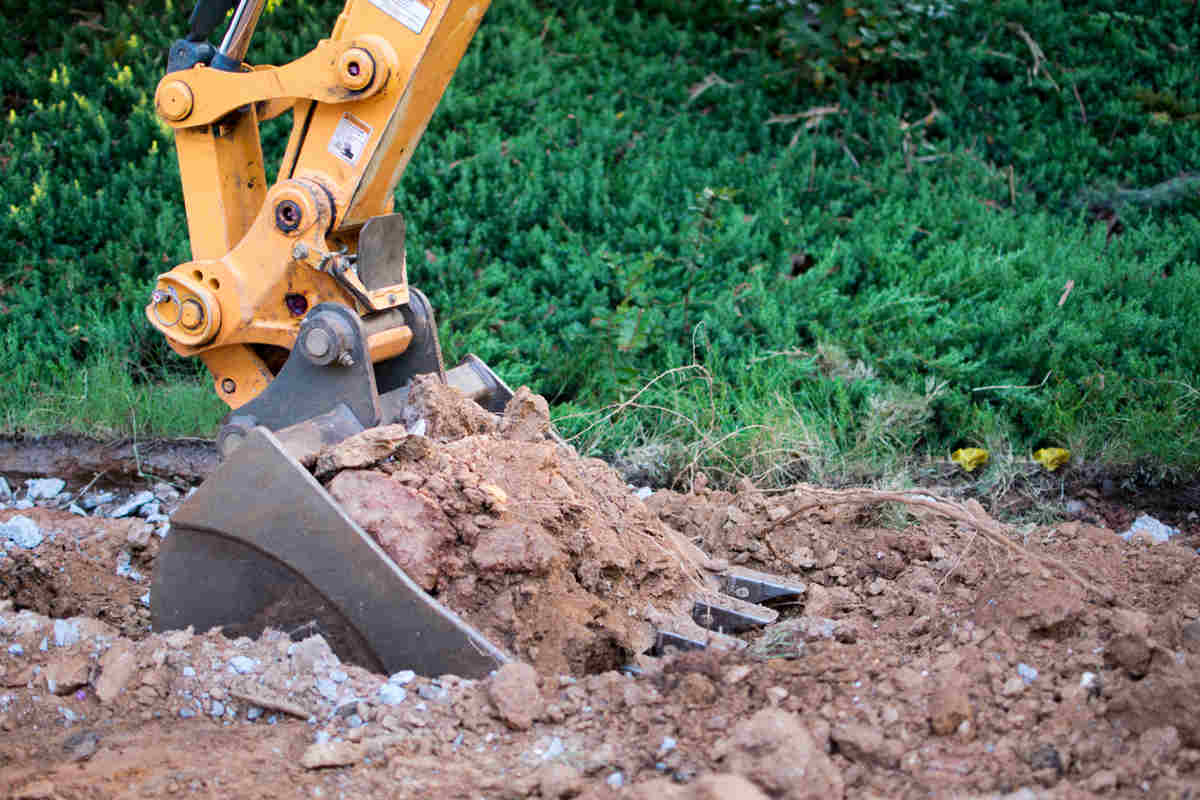
Safety standards have been made in order to protect workers in excavation and trenching.

st. louis shoring services

Construction jobs which involve excavation and trenching are very risky. Nearly two workers die every month and hundreds sustain injuries while performing these tasks. So specific standards have been laid down for the safety of the workers.

About Excavation and Trenching

Any depression, cut, trench, or cavity made by man in the earth’s surface by removing earth is an excavation. A trench is a narrow excavation which is made under the ground and is deeper than its width and is 15 feet wide at the bottom.

Protective Systems

A protective system is mandatory for a trench which is 5 feet or deeper. However, the excavation in stable rock may be exempted from this rule. It is obligatory for trenches which are 20 feet or more deep to have a protective system which is specifically designed for that trench by a certified engineer.

While designing the protective system the soil classification, water content of the soil, the depth of the cut, changes brought about by the weather or climate, the surcharge loads, and the other operations being carried out nearby should be kept in mind.

Some of the commonly used protective systems are:

Benching – In this the sides of the trench are cut into a number of steps or horizontal levels. There are vertical surfaces between the levels.

Sloping – Sometimes the trench wall is cut back at an angle which is inclined away from the area being dug.

Shoring – In order to prevent the soil from moving different types of supports like aluminum hydraulic are installed.

Shielding – This involves the use of trench boxes and other supports to avert soil cave-ins.

Rules to be followed while working near an excavation or trenching site:

  • Employees who work in a trench should have safe access and egress. In trenches which are dug up to 4 feet or more the ladders, ramps, or steps should be located at least within 25 feet for all workers.
  • 0Heavy equipment should be kept at a distance from the edges of the trench.
  • The excavated soil and other surcharge loads should be kept at least 2 feet away from the edges of the trench.
  • Before the workers start digging they should be familiar with the whereabouts of the underground utilities.
  • In trenches which are more than 4 feet deep, the presence of atmospheric hazards like low oxygen, dangerous fumes, and poisonous gases should be detected by conducting tests.
  • Trenches should be checked before starting the work in every shift.
  • They should also be inspected after a rainstorm.
  • In fact, the trench should be carefully checked after any occurrence which can change the conditions in the trench.
  • The workers should not perform their work under any load or material which has been suspended or raised at a height.

All this can help reduce the accidents and protect the workers from injuries. All this can be taken care of by employing services of a professional St. Louis trench shoring company.

St. Louis Trench Shoring Company

Luby Shoring was established in 2015 by Steve Luby. He grew up with construction equipment, spending summers helping in the parts department at his family’s business, Luby Equipment Services. Steve continued working in the industry and was a part of senior management in Luby Equipment’s sales department until he saw the need for expanding the shoring business.

Call Luby Shoring Services today at (636) 660-7467.

Temporary shoring is an excellent way to provide a building with strength and minimize further damage.

temp shoring st louis

Temporary shoring is an emergency band-aid that provides a shelter for structural integrity when a building has lost its stability. Not a “fix,” it is a way to hold the problem steady until a repair can be made and it helps to stop any further insult to the building in the interim.

There are many reasons why a building might need temporary shoring, but most commonly it is necessary when:

  • There is a disaster such as a flood or fire that compromises the structural integrity of a facility, house, or building
  • If a building’s foundation is compromised through settlement and it leads to a crack in the exterior wall
  • If the walls of a building or your home start to bulge outward creating structural problems
  • When an opening in a wall becomes larger either through construction or another disaster

The benefits of hiring a temporary shoring company are that it is an excellent way to provide a building strength and to minimize the potential for further damage that can be more costly. Temporary shoring companies help by setting up walls or beams that hold the structure into place so that repairs can be made safely and without more expense than necessary.

Types of Temporary Shoring Methods

There are a number of different types of temporary shoring methods, some of these include:

  • Dead shores – Dead shores are the method that temporary shoring companies will use when vertical support is necessary. Dead shores are primarily used when most of the house or building has been damaged or removed. Being able to take on a lot of weight to maintain the structure, they are built with beams and posts to strengthen the integrity and build a firm foundation.
  • Flying shores – Flying shores are a method that shoring companies use when there are two buildings involved. If one of the buildings is being removed or demolished and rebuilt, the flying shore can help to stabilize the remaining building. Many different components go into a flying shore such as cleats, needles, horizontal shores and plates.
  • Raking shores – A raking shore is a structure that is used to support any walls that aren’t structurally sound within a building. Using cleats, needles, sole plates, inclined members, bracing and wall plates, they help to keep walls intact to minimize any damage to the existing building or structure.

St. Louis Trench Shoring

When your home or building is compromised either through disaster, old age, or from an adjacent home being renovated, it is always best to give the building the support it needs to maintain its structural integrity. Temporary shoring is an excellent way to provide the necessary tools to ensure that no more costly damage is done. Once temporary shoring is in place, it becomes safer for everyone and repairs can start.

If you are concerned about the integrity of your home’s foundation or structure, it is always best to have it evaluated by a structural engineer. If temporary shoring is needed, it can not only help to stop any more damage; it can help to expedite the repairs and get your home or building back on track.

Call Luby Shoring Services today at (636) 660-7467.

Save

There are a number reasons why shoring is important; employee safety is at the top.

When you think of trenches, you may imagine a bunch of soldiers huddled together but that’s not the only thing trenches are used for. Trenches are actually used much more frequently in construction. In construction, the excavation of earth is a common occurrence, and for many different purposes. Whatever the purpose however, when there is a hole in the earth that is deeper than it is wide, that is classified as a trench.

Trenches are very prone to collapse though, and because of this they need to be stabilized with trench shoring. Trench shoring is material that is used to support a trench so that it doesn’t collapse, and it is very important to the safety of any workers that will be moving around in the trench. Let’s take a look at 5 different reasons why trench shoring is so incredibly important when working with or in trenches.

1. Safety

This is the number one reasons why trench shoring is important. As stated above, trenches are prone to collapse and if a trench happens to collapse while workers are inside, lives can very easily be lost. Depending on how big the trench is, being stuck in a trench collapse could be compared to be buried up to your waist in sand at the beach, or being buried alive by a mudslide or an avalanche. Both are traumatizing and could cause great bodily harm to workers. If you can’t think of any other reason why you should use trench shoring, this one stands alone on its own merit.

2. Time Saved

If a trench collapses, even if nobody is in it it’s still going to cause major problems. The trench will have to be re-dug out, costing you time and money that you don’t have. Trench shoring will prevent your project from being sidetracked.

3. Peace of Mind

Your workers will not be able to work efficiently and quickly if they are constantly worried about their trench collapsing. They might make mistakes and be on edge without the proper support around them.

4. Financial Safety

If a trench collapses, not only will it cost you money to re-dig it and repair or replace anything that was damaged, but if it happens to collapse on your workers, you could be facing lawsuits if they are injured.

5. Future Use

If you are a company that digs lots of trenches, you might be able to make use of your trench boxes over and over again if you buy them. This will save you money in the long term and ensure that you never have to go without trench shoring.

St. Louis Trench Shoring

Trench shoring is incredibly important for many different reasons. If you want your workers to be safe, and avoid costly repairs and wasted time, you need to use trench shoring anytime you have people working in trenches. Not only will it save you time and money, but more importantly it will save your employees lives.

When it comes to excavating projects, rely on Luby Shoring’s expertise. We’ll help you complete any job quickly, while meeting OSHA safety regulations. We have a wide range of options available for fast delivery, and our team will provide options for the correct equipment to use with your job. Call us today at (636) 660-7467 or fill out our online contact form.

Having a competent person on an excavation site helps ensure employee safety at all times.

OSHA Competent Person

When a company requires excavation work on a job site, OSHA mandates that a competent person be there to ensure that the requirements for the OSHA standard are being met. This is necessary to ensure employee safety.

What is a Competent Person?

According to OSHA, a competent person is “one who is capable of identifying existing and predictable hazards in the surroundings or working conditions which are unsanitary, hazardous, or dangerous to employees, and who has authorization to take prompt corrective measures to eliminate them.” (29 CFR 1926.32(f))

This designated person has the responsibility to inspect the trenches and adjacent areas daily, or as conditions change. They need to be able to identify existing issues and predictable hazards. Once identified, the competent person is then able to take corrective measures to control or eliminate these hazardous conditions.

Therefore, the competent person must have very specific training and be knowledgeable about the correct use of protective systems, soil analysis, and the requirements of all trench safety standards. The training course is intended for employees that have the responsibility for ensuring healthy, safe, and sanitary working conditions such as construction supervisors or managers. 

Competent Person Training Course

In order to qualify as a competent person, a trainee must complete the OSHA 30 Hour Construction Training Course. It is handled by an authorized Outreach Trainer and is conducted over the course of 4 consecutive days. Each participant is given their own copy of the OSHA CFR 1926 Construction Standards.

There are a wide variety of topics covered in this 30 hour training course. Some of these topics include, but are not limited to:

  • OSHA requirements for a competent person
  • Competent person responsibilities
  • General requirements for inspections and safety training
  • Health hazards associated with construction work
  • State OSHA programs
  • Fire protection and prevention
  • Material handling, storage and disposal
  • Electrical safety
  • Fall protection for construction
  • Scaffolding on construction sites
  • Trenching and excavation
  • Masonry and concrete construction
  • Demolition work
  • Welding and cutting requirements
  • Power and hand tool use
  • Structural steel construction

Once the course is successfully completed, the trainee will receive an OSHA 30 Hour Construction Training card to place in their wallet. In addition, they will receive a personalized certificate showing that they completed and passed the course.

Rely on Our Expertise to Stay Safe

On major excavation projects there is a lot to think about: OSHA regulations, having the right equipment, and keeping the crew safe. Luby Shoring Services was founded with the goal of providing a wide range of equipment options to get the job done in the most effective and safest way possible. We are confident in our shoring products and know that the workers are safe.

Whether your next job is manhole installations, deep excavation work, horizontal drilling, or any other shoring job, call Luby Shoring Services today at (636) 660-7467 or fill out our online contact form.

Save

Save

Save

Save

It’s important to regularly review the safety regulations that apply to you and your crew.

St. Louis ShoringConstruction crews have to be extremely mindful of OSHA regulations in order to avoid safety violations and fines. We all know that, right? Well, it turns out, it might be a little more complex than it may seem.

As this article from Equipment World illustrates, even though the crew pictured in the article is displaying trench safety that leaves a lot to be desired, they are “technically” not violating OSHA regulations. That’s because they’re city employees, and in this case, their safety regulations are set by a state-run agency.

Depending on the state, safety regulations and fines could be handled by OSHA or state plans, and the strictness of these regulations will vary between the states as well. However, the goal is the same no matter who is setting the guidelines. According to OSHA, “State Plans must set workplace safety and health standards that are ‘at least as effective as’ as OSHA standards. Many State Plans adopt standards identical to OSHA.”

Just because your crew may not be directly regulated by OSHA doesn’t mean you can cut corners or expect lower fines. In some cases, state regulatory bodies can be more strict and issue higher fines than OSHA. As a contractor, it’s important to regularly review the safety regulations that apply to you and your crew.

If you have questions about which shoring equipment is necessary to comply with regulations, contact us at Luby Shoring Services. We’re happy to provide site-specific engineering services and shoring solutions that will keep you on the right side of the regulating body that governs you and that keeps you and your crew safe on the job.

Save