
Aluminum shields are ideal for smaller jobs in place of steel trench boxes.

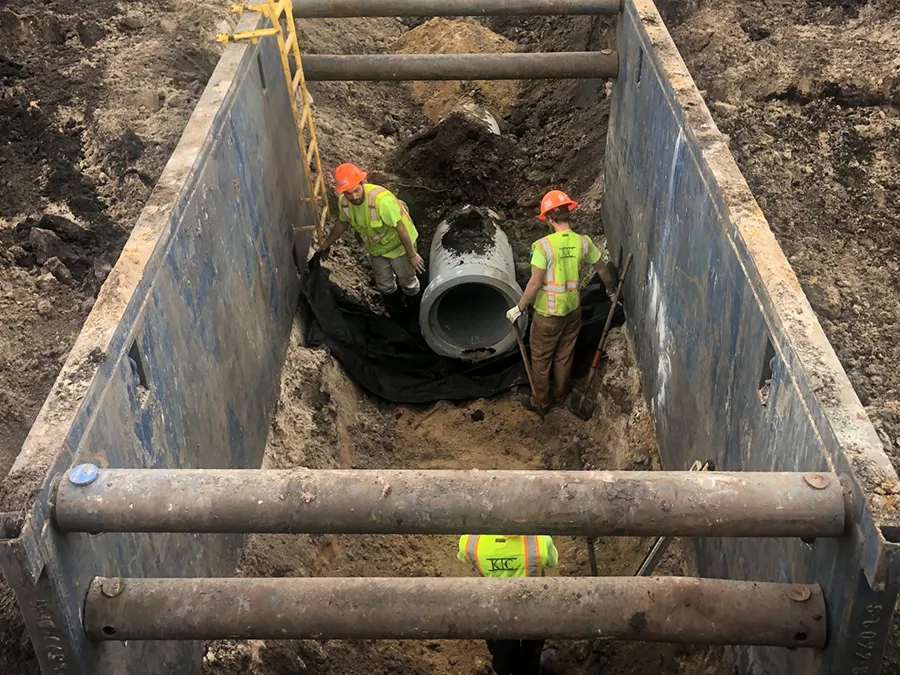
If you own a construction business, you are likely very familiar with the dangers associated with trench cave-ins. A worker can easily suffer a permanent injury or even die as a result of a trench cave-in. Even relatively shallow trenches still pose a threat.
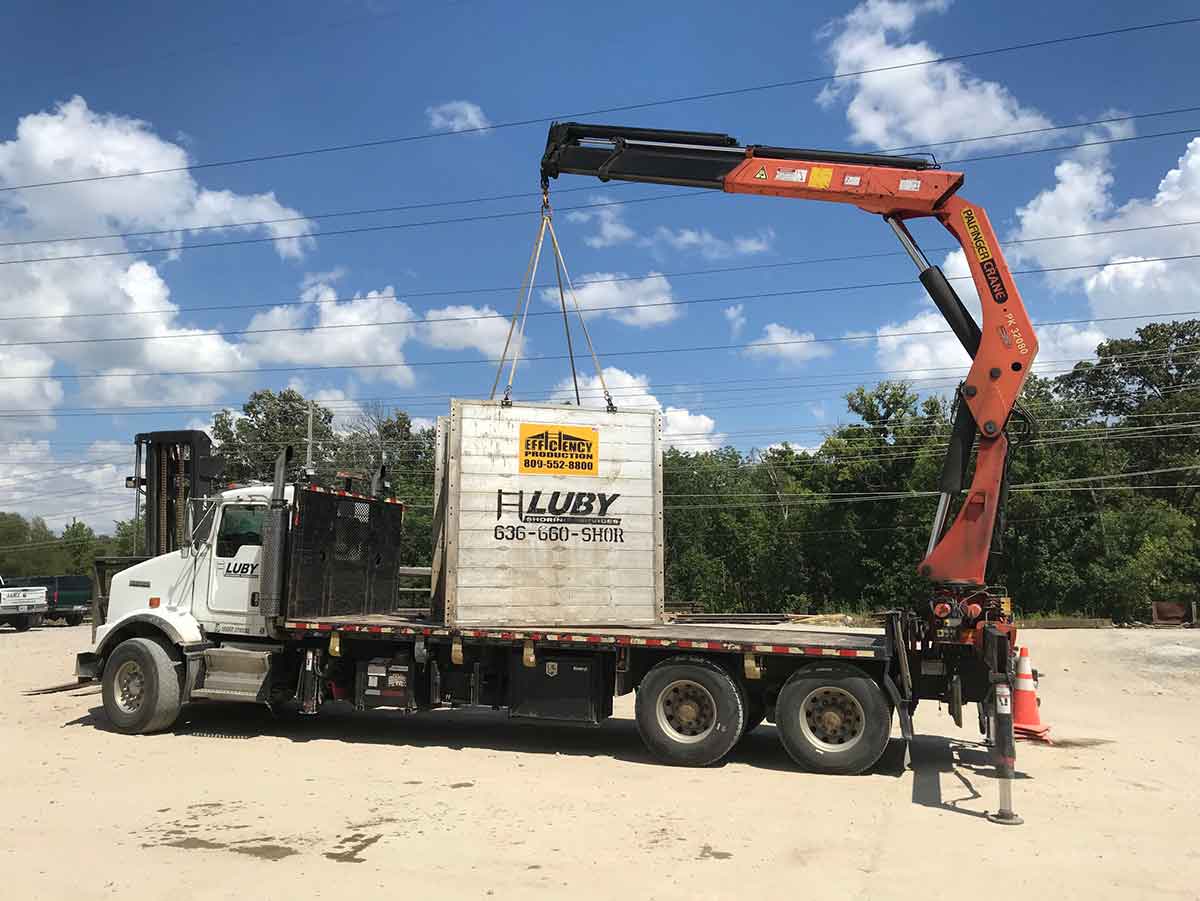
aluminum-trench-shields

Employers not only need to keep their employees safe but must also consider how to protect their company. Using quality equipment like aluminum shields can accomplish both.

At Luby Shoring, we offer a full line of high-quality aluminum double-wall trench shields that are light enough to be used with rubber-tired backhoes, yet strong enough to still protect your workers from injuries or cave-ins. Our equipment is compliant with OSHA safety standards and will ensure the safety of your project!

Benefits of Aluminum Trench Boxes 

Also known as trench boxes, aluminum trench shields are engineered to offer security and protection for excavation sites that steel trench boxes provide, yet are less than half the weight. They are ideal for smaller jobs that can take the place of steel trench boxes. They are easy to transport and assemble. Another advantage is that they are stackable with Build-A-Box™.

Ease of Installation

In addition to safety, one of the primary benefits of aluminum shields is the ease of installation. Trench cages can be quite large and therefore require heavy machinery to maneuver. Installation of these heavier materials typically requires more workers and can take a large portion of the work day. The lighter, smaller nature of aluminum shoring materials means less workers and only requires a small piece of equipment for installation.

The use of aluminum trench boxes is cost effective and yet still provides the same measure of protection for your crew.

St. Louis Custom Trench Shoring

At Luby Shoring Services, we provide a wide selection of standard and custom trench shielding and shoring options. Our equipment is cost effective, safe and versatile, relied upon by underground utility professionals, municipalities and private contractors. All products are Professional Engineer certified to help you meet OSHA’s excavation and trench safety standards.
Call us today at (636) 660-7467 or fill out our online contact form.

Because no two projects are the same, shoring and shielding methods will also differ.

trench shielding vs trench shoring

Shoring is a process that is used to hold up structures that either have structural integrity issues or foundation problems, or if major repairs need to be made to improve a structure’s safety. Because no two projects are the same, shoring methods will also differ. The key to choosing any shoring equipment is knowing the scope of your project and how to keep everyone safe.

There are different types of trench shoring equipment that underground energy specialists and other types of industries use. Often, shoring equipment is not a permanent piece of equipment, it’s generally rented to make the repairs.

No Two Trenching Jobs are the Same

The scope of excavation varies in parameters from one job to the next and depends on many factors, such as the kind of soil that surrounds the structure, the type of structure the shoring equipment needs to support, or even what barriers are going to exist in the location that the trenching material might have to work around.

Before you choose which type of shoring equipment to rent, it is best to have a structural engineer or a shoring expert evaluate the site and make a recommendation about the equipment you need to keep everything safe. Since no job is going to be a one-size-fits-all, finding someone who has a vast amount of experience in the industry is imperative to keeping your crew and any other workers on-site safe.

The type of shoring equipment you need will also be determined by the municipality where you work and the guidelines in place for the safety of trenching and shoring. To ensure that you are meeting the requirements, it is imperative to work with the government agencies that will be inspecting the site.

What is the Difference Between Shielding and Shoring?

Although sometimes “shoring” and “shielding” are considered synonymous, they actually are not. Shielding and shoring involve two different styles and have their own requirements from the Occupational Safety and Health Association. If you have to protect a system, then you make a trench “shield or box” that is installed to safeguard employees from things caving in on them. Shoring is a different process, it uses an entire structural unit or hydraulic force to protect the structure against any trench walls giving in. That is why it is crucial to have a professional determine which method is required for the scope of your individual project.

To make sure that you are employing the right process for making repairs if the structure of your job site or building’s integrity has been compromised, get a professional who understands your needs, the scope of your project, and what the laws are for the municipality where you are working, to ensure workers’ safety while making repairs. Since shoring and trenching are different, the key is to figure out which one you need for your individual project to protect everyone, including your business.

St. Louis Trench Shoring & Excavation Services – Call Luby Shoring Services at (636) 660-7467

A competent person is an individual who has the capacity to identify the predictable and existing dangers. 

The competent person plays a very significant role in trenching and excavation. He is well trained and has a comprehensive knowledge of the task.

The Competent Person

A competent person is an individual who has the capacity to identify the predictable and existing dangers in the workplace. He can clearly perceive the working conditions which are hazardous or unsanitary and pose a risk to the workers. He has the ability to identify the types of soil and design suitable protective systems. He possesses the authority to implement corrective measures to get rid of the hazards.

Role in Trenching and Excavation

The competent person has a great deal of responsibility. Trenching and excavation work is inherently dangerous. Accidents can occur at any time. The workers can get injured while performing their duties.

So the competent person must be very capable and well qualified. He must be trained suitably for the job. He should have a complete knowledge of the field. It is imperative that the person who holds this position is acquainted with all the aspects of excavation and the rules and regulations associated with the occupation.

He should be familiar with the applicable laws and requirements for personal protective equipment, utility location, confined space, rigging and design, and hazardous atmosphere testing.

A suitably trained competent person who is equipped with the right tools can make a great difference. He can get rid of the major hazards. At the same time, he can foresee the latent risks and take appropriate steps to reduce them.

Some of the specific qualifications include:

  • In order to achieve his goal of providing a safe work environment, he should have an open and clear communication with the staff responsible for the trenching operations. In order to achieve his goal of providing a safe work environment, he should have an open and clear communication with the staff responsible for the trenching operations.
  • He should devise suitable protective systems on the basis of the conditions of the site. While doing this, he must keep the depth and width of the trench and the soil conditions in mind.
  • He must keep a watch on all the employees who work in the excavation. He should ensure that each worker is trained properly and knows his work, is familiar with the hazards and the protective measures and knows what to do in an emergency.
  • He has to inspect the excavation and the areas around it.
  • He must conduct tests to check if there is an oxygen deficiency or a concentration of hazardous gases in the atmosphere.
  • He should analyze visually or test and classify the soil and rock deposits. If the conditions change he should re-classify the same. He must use this knowledge to determine the appropriate protection.
  • If there are chances of a cave-in, or if the protective arrangements are not working, if the atmosphere or the working conditions are hazardous, the competent person must immediately remove the workers from there. They should be allowed to return to work at the place only after all the safety precautions have been taken.

In this way, the competent person can play a vital role in trenching and excavation. Need competitive person training or St. Louis trench shoring services? Contact us now by calling (636) 660-7467 or by filling out our online contact form.

When it comes to excavating projects, rely on Luby Shoring’s expertise.

st louis trench shoring

An aluminum trench shoring system is used on the sites where the ground is unstable. The
walls in a trench are braced with the trench shoring boxes so that they do not collapse. This
helps protect workers from getting injured while performing their tasks in trenches.

The trench boxes have spring mounted flexible spindles. The cut and lower method is used
to install them. The thickness of the plates vary.

Employee Safety

Top priority is given to the safety of workers on any construction site. The task of excavation can be very risky. Workers often have to work in trenches which are several feet deep and extend for miles. The most dangerous part of the job is that the walls of a trench or an excavation may cave-in and trap the workers under the dirt and other materials.

Companies use different types of equipment to avoid such accidents and to make the job
safer for the employees.

Types of Hydraulic Aluminum Trench Shoring Systems

Various types of equipment can be utilized according to the size and type of the trench. The
most popular ones are:

  • Hydraulic shoring – In this method, hydraulic pistons are used with heavy plywood or steel plates to shore up the trench. First, the plywood or the plates are put in the appropriate places. After that, the pistons are positioned. They are activated till they press against the walls. In this way the place is made safe for the workers.
  • The soldier boarding method is used for some type of trenches.
  • The beam and plate method – First, steel beams are fixed in the ground. Then steel plates are inserted between them. This helps to shore up the walls of the trench. Wooden planks are utilized instead of steel plates in some jobs.

Some people have an impression that trenches are dug to install pipes or some other things below the ground. However, trenches are dug for other purposes also. They are required for installing manholes too. It is equally important to shore up such trenches and make them safe.

An Innovative Method of Shoring

New methods have been developed to make the trenches safe for the workers. The fin form
takes advantage of the pressure exerted by the surrounding ground on the trench walls. In
this, first when the walls are put into the ground they are slightly angled. Then they bow out and become straight. In this way, they create a very tight fit and it is not possible for the trench walls to waver or collapse. The fin form walls are frequently used in manhole
construction where the spaces are narrow and tight and there are more chances of collapse. 

The hydraulic aluminum trench shoring products like vertical shores, hydraulic shields, end
shores, manhole shoring and waler systems are very useful for doing spot repairs, and for
working in tight situations, or working in places where it is not possible to use bulky
machinery.

St. Louis Shoring & Excavation Services

When it comes to excavating projects, rely on Luby Shoring’s expertise. We’ll help you complete any job quickly, while meeting OSHA safety regulations. We have a wide range of options available for fast delivery, and our team will provide options for the correct equipment to use with your job.

Call us today at (636) 660-7467 or fill out our online contact form.

Each year, many people lose their lives in trench collapse accidents.

Trenches are one of the most dangerous places to work in. In fact, each year, many people lose their lives in trench collapse accidents. It is unfortunate that while trench collapse deaths are easily preventable, a large number of these deaths still occur each year. Some common causes of trench related injuries and deaths are:

  • Pressures of time and money
  • Lack of supervision
  • Ignorance to safety rules
  • Laziness or general negligence

Having provided St. Louis trench shoring services on various work sites, we have realized that some sites have very poor operational and safety procedures for working in trenches. Many people do not even understand the basic safety requirements. They are supposed to provide a means of egress at a depth of 4 feet, and proper protective systems at 5 feet deep. However, many are not even aware of these basics, and they tend to compromise the safety of workers.

Most construction companies claim that safety comes first. However, all too often this is not reflect in their actions. Each year, a large number of trench collapse deaths are reported. In 2016, more trench collapse deaths were reported than the previous year. According to the Occupational Safety and Health Administration (OSHA), 2016 saw more trench collapse deaths than 2014 and 2015 combined. There were 11 deaths each reported in 2014 and 2015, while there were 23 deaths in 2016. While the numbers seem shocking, they also highlight the urgent need to take appropriate safety measures.

In all these years of providing St. Louis trench shoring services, we have come to understand that trench collapses happen pretty fast and have devastating consequences. Consider this – a cubic yard of soil can weigh as much as 3,000 pounds. You can therefore imagine the amount of damage it can inflict.

In a statement released by OSHA, it was quoted that trench fatalities have more than doubled since 2015, which is an unacceptable and alarming trend. One OSHA official said, ”There is no excuse. These fatalities are completely preventable by complying with OSHA standards that every construction contractor should know.” (Source)

While the construction company is primarily responsible for the safety of all workers, it is also the responsibility of everyone else to follow proper safety practices and standards. Recently, a general contractor and foreman were convicted of criminal negligence after a laborer died in a trench collapse accident in New York. Apart from facing criminal negligence charges, companies may also have to pay huge fines. A company in Ohio had to pay more than $200,000 after a worker was crushed to death in a trench collapse last year. The company had failed to provide appropriate trench cave-in protection, failed to train employees in recognizing hazards, and failed to protected employees from excavated material rolling into a trench or falling from inside the trench walls.

Need help with your project? Call Luby Shoring Services today at (636) 660-7467.

Contact Us Online

This system is installed for the safety of the workers and to give stability to the trench, extending its lifespan.

St Louis Shoring Services

The people who work in the construction industry are familiar with the trench box system. It is an amazing system which is installed for the safety of the workers who perform the tasks of digging and excavating. Not only this, it is also very effective in giving stability to the trench and extending its lifespan.

A Trench Box

A trench box is also known as a trench shield, sewer box, manhole box, or a tap box. It is used in the construction work. It provides stability to a trench and keeps the utility workers safe while they carry out their duties.

It is a two sided support system used in a mechanical excavation. A trench box is an important shoring equipment which is a boon for excavators. It helps to increase job safety as well as productivity.

Workers use them while they pour the foundations. They also utilize trench boxes when they have to repair a piping or wiring underground.

Trench boxes are extremely important for the construction industry. The construction of new buildings or homes requires digging and excavation of the soil. So trench boxes are indispensable for the safety of the workers on the construction sites.

The Structure Of The Trench Box System

There are two types of trench boxes – steel trench boxes and aluminum trench boxes. They are made of two plates which are known as shields. The spreaders hold them apart. The plates line the trench’s walls. The spreaders are beams which are placed perpendicular to the plates and function as braces. All the parts are welded together to make the trench box system stable.

The system is designed in such a way that the workers can get in and come out of the trench box. This is very crucial in times of an emergency when they have to get out quickly from the area.

Benefits of Using Trench Boxes

Improves the stability of the trench – A trench shoring box is very important because it helps to make the trench more stable and long lasting. In the absence of a trench box, the hole can cave-in in a matter of few seconds. A trench box system assists in keeping the hole stable and safe for many months if the type of soil, the weather conditions and the depth of the trench are suitable. It is very valuable for long term construction projects.

Provides protection to the workers – Trench and excavation work is hazardous by nature. Trench cave-ins can take place even when all the safety precautions are taken. The trench box adds an extra layer of protection for the workers. It aims at minimizing the risk of injury to the workers while doing their job. There are safety regulations to ensure that the trench boxes are used appropriately. The maximum depth at which the trench box system can be used in a safe manner is determined by the depth rating regulations.

St. Louis Shoring Services

Looking for reliable St. Louis trench shoring services? Contact Luby Shoring Services for a wide selection of custom and standard trench shielding and shoring options.

Call us today at (636) 660-7467 or fill out our online contact form.

Maintaining the expected standards of safety are key to preventing trenching accidents.

st louis trench shoring

Trenching and shoring tasks involve a lot of hard work. As if that is not enough, the enormous chances of accidents make the job even tougher. So workers who begin excavation work must prepare themselves properly and take all the necessary precautions before they undertake the massive task.

Do Your Homework

Do not forget to do the homework before embarking on the task. Take the time to make a thorough study of the safety guidelines. Read and re-read the instructions so that you do not miss anything important. A slight mistake can be injurious to your well being. These regulations have been formulated on the basis of earlier experiences of other trench workers. Learn from their mistakes and be safe. As it is rightly said, knowledge is power. Equip yourself with all the essential knowledge to avert an accident.

Study the Ground Conditions

Study the condition of the ground properly. Try to get as much information as possible from others about the prevalent risks. This will enable you to do the job appropriately and adequately. For instance, you must be familiar with the nature of the ground, whether it is made up of sand, dirt, or a rocky mix. You need to be acquainted with the weather patterns too. Try to find out if the weather has been windy or rainy recently because these things have a lot of impact on the texture of the ground.

Use the Right Equipment

Make sure you use equipment which has been approved for the work. Such equipment can go a long way in preventing accidents as it is specially designed for excavation work. The safety equipment is made keeping in mind the depth of the trenches and the
installation methods involved. Sometimes you may be able to find videos which demonstrate how to use the equipment. You can also contact people who provide this type of equipment and get a good bargain for renting or purchasing them. It will save a lot of time and energy as those people may offer all the information you need to do the work safely.

Adopt the Right Approach

Do not be careless and overlook the risks involved in the work. Remember, prevention is key. It may be a much easier task to pay full attention to the regulations and do the work carefully than to undo the harm once it is done. Try your best to do the work in absolute conjunction with the guidelines laid down. This will save you the hassle of paying fines and facing other issues when an accident occurs. Spend some time in laying the groundwork. Take due precautions and discharge your duty safely and successfully. Aim to have zero incidents on the trenching site. Maintain the expected standards of safety and avoid accidents. It is in your best interest to hire professional St. Louis trench shoring services. This will ensure that your project goes smoothly and safely.

Call Luby Shoring Services today at (636) 660-7467.

Save

Save

Before undertaking any excavation work, it is important to assess and classify the soil.

st louis trench shoring

A construction project may require an excavation at the site. Before taking up any excavation work, it is important to assess and classify the soil in order to ensure the safety of the workers.

Classification of The Soil

Structural Classification – The first step in evaluating the soil involves a structural classification of the soil on the site. Soil may be granular, granular cohesionless or cohesive in nature. The granular soil has 15% of clay and silt while cohesive soil has less than 15% of clay or silt.

Type Classifications – After categorizing the soil on its structural basis it may be classified according to its type. This helps the engineers to understand the plasticity of the soil and
determine the structural support to be used.

Types Of Soils

Type A – This soil is very stable. It has to be sloped at an angle of 53 degrees or 3/4:1 ratio. That means in an excavation the sides should slope back 3/4 foot for every 1-foot depth. It is cohesive. It is unconfined compressive strength is 1.5 tsf (tons per square foot) or more. This type of soil can be benched to provide protection to the workers. For this, a stair-step is created. The soil rises vertically from the base up to 5 feet and extends 4 feet horizontally forming angles of 90 degrees on the sides. It is repeated till the top.

Clay, sandy clay, clay loam and silty clay are some examples of this type of soil.

Type B – It is less stable compared to Type A. It is very cohesive. It’s unconfined compressive strength is between 0.5 to 1.5 tsf. It has to be sloped at an angle of 45 degrees or 1:1 ratio. In an excavation after a depth of 1 foot, the sides should be sloping back 1 foot. This type of soil can be benched, vertically rising 4 feet from the bottom and extending 4 feet
horizontally forming angles of 90 degrees on the sides. This can be repeated till the top.

This type of soil includes granular non-cohesive soils like angular gravel, silt loam, silt, sandy loam, disturbed soil which is not categorized as Type C, soil which is subject to vibration or is fissured but has the unconfined compressive strength like Type A, and dry rock which is not stable.

Type C – This is the most dangerous type of soil. It has minimum stability compared to the others. It should be sloped at an angle of 34 degrees or 1-1/2:1 ratio. The angle may have to be increased depending on the water seepage or saturation. This type of soil is cohesive. It’s unconfined compressive strength is 0.5 tsf or less. Benching should not be done for Type C soil.

Granular soils like sand, gravel, loamy sand, soil from which the water seeps freely, the submerged rock which is not stable and submerged soil are included in this category.

Call Luby Shoring Services today at (636) 660-7467.

Save