
Maintaining the expected standards of safety are key to preventing trenching accidents.

st louis trench shoring

Trenching and shoring tasks involve a lot of hard work. As if that is not enough, the enormous chances of accidents make the job even tougher. So workers who begin excavation work must prepare themselves properly and take all the necessary precautions before they undertake the massive task.

Do Your Homework

Do not forget to do the homework before embarking on the task. Take the time to make a thorough study of the safety guidelines. Read and re-read the instructions so that you do not miss anything important. A slight mistake can be injurious to your well being. These regulations have been formulated on the basis of earlier experiences of other trench workers. Learn from their mistakes and be safe. As it is rightly said, knowledge is power. Equip yourself with all the essential knowledge to avert an accident.

Study the Ground Conditions

Study the condition of the ground properly. Try to get as much information as possible from others about the prevalent risks. This will enable you to do the job appropriately and adequately. For instance, you must be familiar with the nature of the ground, whether it is made up of sand, dirt, or a rocky mix. You need to be acquainted with the weather patterns too. Try to find out if the weather has been windy or rainy recently because these things have a lot of impact on the texture of the ground.

Use the Right Equipment

Make sure you use equipment which has been approved for the work. Such equipment can go a long way in preventing accidents as it is specially designed for excavation work. The safety equipment is made keeping in mind the depth of the trenches and the
installation methods involved. Sometimes you may be able to find videos which demonstrate how to use the equipment. You can also contact people who provide this type of equipment and get a good bargain for renting or purchasing them. It will save a lot of time and energy as those people may offer all the information you need to do the work safely.

Adopt the Right Approach

Do not be careless and overlook the risks involved in the work. Remember, prevention is key. It may be a much easier task to pay full attention to the regulations and do the work carefully than to undo the harm once it is done. Try your best to do the work in absolute conjunction with the guidelines laid down. This will save you the hassle of paying fines and facing other issues when an accident occurs. Spend some time in laying the groundwork. Take due precautions and discharge your duty safely and successfully. Aim to have zero incidents on the trenching site. Maintain the expected standards of safety and avoid accidents. It is in your best interest to hire professional St. Louis trench shoring services. This will ensure that your project goes smoothly and safely.

Call Luby Shoring Services today at (636) 660-7467.

Save

Save

Safety standards have been made in order to protect workers in excavation and trenching.

st. louis shoring services

Construction jobs which involve excavation and trenching are very risky. Nearly two workers die every month and hundreds sustain injuries while performing these tasks. So specific standards have been laid down for the safety of the workers.

About Excavation and Trenching

Any depression, cut, trench, or cavity made by man in the earth’s surface by removing earth is an excavation. A trench is a narrow excavation which is made under the ground and is deeper than its width and is 15 feet wide at the bottom.

Protective Systems

A protective system is mandatory for a trench which is 5 feet or deeper. However, the excavation in stable rock may be exempted from this rule. It is obligatory for trenches which are 20 feet or more deep to have a protective system which is specifically designed for that trench by a certified engineer.

While designing the protective system the soil classification, water content of the soil, the depth of the cut, changes brought about by the weather or climate, the surcharge loads, and the other operations being carried out nearby should be kept in mind.

Some of the commonly used protective systems are:

Benching – In this the sides of the trench are cut into a number of steps or horizontal levels. There are vertical surfaces between the levels.

Sloping – Sometimes the trench wall is cut back at an angle which is inclined away from the area being dug.

Shoring – In order to prevent the soil from moving different types of supports like aluminum hydraulic are installed.

Shielding – This involves the use of trench boxes and other supports to avert soil cave-ins.

Rules to be followed while working near an excavation or trenching site:

  • Employees who work in a trench should have safe access and egress. In trenches which are dug up to 4 feet or more the ladders, ramps, or steps should be located at least within 25 feet for all workers.
  • 0Heavy equipment should be kept at a distance from the edges of the trench.
  • The excavated soil and other surcharge loads should be kept at least 2 feet away from the edges of the trench.
  • Before the workers start digging they should be familiar with the whereabouts of the underground utilities.
  • In trenches which are more than 4 feet deep, the presence of atmospheric hazards like low oxygen, dangerous fumes, and poisonous gases should be detected by conducting tests.
  • Trenches should be checked before starting the work in every shift.
  • They should also be inspected after a rainstorm.
  • In fact, the trench should be carefully checked after any occurrence which can change the conditions in the trench.
  • The workers should not perform their work under any load or material which has been suspended or raised at a height.

All this can help reduce the accidents and protect the workers from injuries. All this can be taken care of by employing services of a professional St. Louis trench shoring company.

St. Louis Trench Shoring Company

Luby Shoring was established in 2015 by Steve Luby. He grew up with construction equipment, spending summers helping in the parts department at his family’s business, Luby Equipment Services. Steve continued working in the industry and was a part of senior management in Luby Equipment’s sales department until he saw the need for expanding the shoring business.

Call Luby Shoring Services today at (636) 660-7467.

Before undertaking any excavation work, it is important to assess and classify the soil.

st louis trench shoring

A construction project may require an excavation at the site. Before taking up any excavation work, it is important to assess and classify the soil in order to ensure the safety of the workers.

Classification of The Soil

Structural Classification – The first step in evaluating the soil involves a structural classification of the soil on the site. Soil may be granular, granular cohesionless or cohesive in nature. The granular soil has 15% of clay and silt while cohesive soil has less than 15% of clay or silt.

Type Classifications – After categorizing the soil on its structural basis it may be classified according to its type. This helps the engineers to understand the plasticity of the soil and
determine the structural support to be used.

Types Of Soils

Type A – This soil is very stable. It has to be sloped at an angle of 53 degrees or 3/4:1 ratio. That means in an excavation the sides should slope back 3/4 foot for every 1-foot depth. It is cohesive. It is unconfined compressive strength is 1.5 tsf (tons per square foot) or more. This type of soil can be benched to provide protection to the workers. For this, a stair-step is created. The soil rises vertically from the base up to 5 feet and extends 4 feet horizontally forming angles of 90 degrees on the sides. It is repeated till the top.

Clay, sandy clay, clay loam and silty clay are some examples of this type of soil.

Type B – It is less stable compared to Type A. It is very cohesive. It’s unconfined compressive strength is between 0.5 to 1.5 tsf. It has to be sloped at an angle of 45 degrees or 1:1 ratio. In an excavation after a depth of 1 foot, the sides should be sloping back 1 foot. This type of soil can be benched, vertically rising 4 feet from the bottom and extending 4 feet
horizontally forming angles of 90 degrees on the sides. This can be repeated till the top.

This type of soil includes granular non-cohesive soils like angular gravel, silt loam, silt, sandy loam, disturbed soil which is not categorized as Type C, soil which is subject to vibration or is fissured but has the unconfined compressive strength like Type A, and dry rock which is not stable.

Type C – This is the most dangerous type of soil. It has minimum stability compared to the others. It should be sloped at an angle of 34 degrees or 1-1/2:1 ratio. The angle may have to be increased depending on the water seepage or saturation. This type of soil is cohesive. It’s unconfined compressive strength is 0.5 tsf or less. Benching should not be done for Type C soil.

Granular soils like sand, gravel, loamy sand, soil from which the water seeps freely, the submerged rock which is not stable and submerged soil are included in this category.

Call Luby Shoring Services today at (636) 660-7467.
Save

Temporary shoring is an excellent way to provide a building with strength and minimize further damage.

temp shoring st louis

Temporary shoring is an emergency band-aid that provides a shelter for structural integrity when a building has lost its stability. Not a “fix,” it is a way to hold the problem steady until a repair can be made and it helps to stop any further insult to the building in the interim.

There are many reasons why a building might need temporary shoring, but most commonly it is necessary when:

  • There is a disaster such as a flood or fire that compromises the structural integrity of a facility, house, or building
  • If a building’s foundation is compromised through settlement and it leads to a crack in the exterior wall
  • If the walls of a building or your home start to bulge outward creating structural problems
  • When an opening in a wall becomes larger either through construction or another disaster

The benefits of hiring a temporary shoring company are that it is an excellent way to provide a building strength and to minimize the potential for further damage that can be more costly. Temporary shoring companies help by setting up walls or beams that hold the structure into place so that repairs can be made safely and without more expense than necessary.

Types of Temporary Shoring Methods

There are a number of different types of temporary shoring methods, some of these include:

  • Dead shores – Dead shores are the method that temporary shoring companies will use when vertical support is necessary. Dead shores are primarily used when most of the house or building has been damaged or removed. Being able to take on a lot of weight to maintain the structure, they are built with beams and posts to strengthen the integrity and build a firm foundation.
  • Flying shores – Flying shores are a method that shoring companies use when there are two buildings involved. If one of the buildings is being removed or demolished and rebuilt, the flying shore can help to stabilize the remaining building. Many different components go into a flying shore such as cleats, needles, horizontal shores and plates.
  • Raking shores – A raking shore is a structure that is used to support any walls that aren’t structurally sound within a building. Using cleats, needles, sole plates, inclined members, bracing and wall plates, they help to keep walls intact to minimize any damage to the existing building or structure.

St. Louis Trench Shoring

When your home or building is compromised either through disaster, old age, or from an adjacent home being renovated, it is always best to give the building the support it needs to maintain its structural integrity. Temporary shoring is an excellent way to provide the necessary tools to ensure that no more costly damage is done. Once temporary shoring is in place, it becomes safer for everyone and repairs can start.

If you are concerned about the integrity of your home’s foundation or structure, it is always best to have it evaluated by a structural engineer. If temporary shoring is needed, it can not only help to stop any more damage; it can help to expedite the repairs and get your home or building back on track.

Call Luby Shoring Services today at (636) 660-7467.
Save

Trench shoring is subject to a number of legal and technical requirements to guarantee safety.


Trench shoring is a very common technique used in underground excavation. It is needless to say that it is also one of the riskiest aspects of construction and mining work, so it should be approached with foresight and extreme caution.

To ensure that the trench shoring is installed properly and works well, you need the
right tools and a well trained crew. You can ensure this just by employing the right kind of St. Louis Trench Shoring Services. Here is some information about the legal and technical requirements of a trench shoring project.

Legal Requirements

Trench shoring, just like any other construction project, is subject to a number of legal requirements mandated by law. One such legal requirement is that any trench which is more than 5 feet deep must have shoring to ensure worker safety. The types of procedures and tools that should be implemented for any specific project is determined mainly by soil evaluation, and also by environmental factor such as transport systems, surrounding buildings, protected green zones and pipelines.

Technical Requirements

The technical requirements of a trench shoring project are determined by both the project specifications and legal requirements. Soil type directly influences the types of tools that should be used and how steep and how deep a trench excavation should be.  It is important to note that safety should always be top priority or primary requirement for any construction project regardless of its complexity, budget and time frame.

Safety and Health

Safety and health is the key reason why it is important to ensure that the trench shoring is installed correctly. It is a well known fact that trenches are extremely dangerous places to work in and each year, many accidents occur causing serious injuries and sometimes loss of life.

In the entire excavation process, the actual act of excavation is the most dangerous part, so most construction workers prefer using reinforcement methods that need minimal human intervention during the process. For example, hydraulic shoring can be installed with little human involvement. No one needs to enter the trench to install hydraulic shoring.

Benefits of Hiring St. Louis Trench Shoring Services

When it comes to trench shoring, choosing the right provider can make all the difference. Proper installation ensures that the shoring provides the best possible structural support. A competent and qualified St. Louis trench shoring services contractor should oversee the complete shoring installation process in order to identify any potential risks and to prevent them from occurring at the first place.

Call (636) 660-7467 :: Experts in trench shoring and excavation projects. Quickly complete any job while meeting OSHA safety regulations. Trench shields & shoring equipment rental.


Save

At Luby Shoring Services, we use a variety of trench shoring techniques.

St Louis Trench Shoring


OSHA aims at providing safe working conditions which are conducive for the health of the workers. To achieve this, it sets and enforces standards, and provides training, education, and assistance to the construction workers. According to OSHA, excavating is one of the most dangerous construction operations, and it has set guidelines and procedures for safe excavation work.

What Is Trench Shoring

Shoring involves the use of shores or props to hold up or support some unstable or weak thing. When the workers are excavating shoring systems are used for the safety of the workers and to speed up the excavation work. This is known as trench shoring. St. Louis trench shoring services uses various techniques, which include some of the following.

Hydraulic Shoring And Its Advantages

Hydraulic shoring consists of using hydraulic pistons which are pumped outward till they press against the walls of the trench. Usually, prefabricated struts and aluminum or steel wale systems are used in this method.

Hydraulic shoring is very popular as it is faster and easier to use. Other methods are generally used for long term applications and larger excavations.

Reasons for the popularity of hydraulic shoring:

  • It is more safe than timber shoring. The workers need not go into the trench to install or to remove hydraulic shoring.
  • Hydraulic systems can be easily installed by a worker as they are light.
  • The pressure is evenly distributed along the trench because they are suitably gauge regulated.
  • The trench faces can be preloaded and the movement can be prevented by using the natural cohesion of the soil.
  • They can be used suitably for trenches of different widths and depths.

Some points to keep in mind while using hydraulic shoring:

  • Install the shoring from the top and remove from the bottom.
  • Check the shoring at least once in every shift. There may be leaking hoses or cylinders, cracked nipples, broken connections, bent bases, or any other defective parts which may need attention.

Pneumatic Shoring And Its Limitation

The other type of shoring is known as pneumatic shoring. It performs the same functions like the hydraulic shoring, except that it utilizes air pressure instead of hydraulic pressure.
The major limitation of this kind of shoring is that it requires an air compressor to work.

Screw Jacks May Be Dangerous

In the screw jack system the struts have to be adjusted manually. So the worker has to go into the trench to adjust it. This may be dangerous. Moreover, it is not possible to achieve uniform preloading with the heavy screw jacks.

Single Cylinder Hydraulic Shores

This type of shores are utilized in water systems to give support to the timber shoring, and to give face stability in shallow trenches.

Underpinning To Reinforce The Foundation

In this, the foundations, adjacent structures, and various intrusions which can influence the excavation work, are stabilized. Underpinning physically reinforces the foundation. But this kind of work requires the expert guidance of a well qualified engineer.

St. Louis Shoring Services

When it comes to excavating projects, rely on Luby Shoring’s expertise. We’ll help you complete any job quickly, while meeting OSHA safety regulations. Call us today at (636) 660-7467 or fill out our online contact form.

Save

Save

There are a number reasons why shoring is important; employee safety is at the top.

When you think of trenches, you may imagine a bunch of soldiers huddled together but that’s not the only thing trenches are used for. Trenches are actually used much more frequently in construction. In construction, the excavation of earth is a common occurrence, and for many different purposes. Whatever the purpose however, when there is a hole in the earth that is deeper than it is wide, that is classified as a trench.

Trenches are very prone to collapse though, and because of this they need to be stabilized with trench shoring. Trench shoring is material that is used to support a trench so that it doesn’t collapse, and it is very important to the safety of any workers that will be moving around in the trench. Let’s take a look at 5 different reasons why trench shoring is so incredibly important when working with or in trenches.

1. Safety

This is the number one reasons why trench shoring is important. As stated above, trenches are prone to collapse and if a trench happens to collapse while workers are inside, lives can very easily be lost. Depending on how big the trench is, being stuck in a trench collapse could be compared to be buried up to your waist in sand at the beach, or being buried alive by a mudslide or an avalanche. Both are traumatizing and could cause great bodily harm to workers. If you can’t think of any other reason why you should use trench shoring, this one stands alone on its own merit.

2. Time Saved

If a trench collapses, even if nobody is in it it’s still going to cause major problems. The trench will have to be re-dug out, costing you time and money that you don’t have. Trench shoring will prevent your project from being sidetracked.

3. Peace of Mind

Your workers will not be able to work efficiently and quickly if they are constantly worried about their trench collapsing. They might make mistakes and be on edge without the proper support around them.

4. Financial Safety

If a trench collapses, not only will it cost you money to re-dig it and repair or replace anything that was damaged, but if it happens to collapse on your workers, you could be facing lawsuits if they are injured.

5. Future Use

If you are a company that digs lots of trenches, you might be able to make use of your trench boxes over and over again if you buy them. This will save you money in the long term and ensure that you never have to go without trench shoring.

St. Louis Trench Shoring

Trench shoring is incredibly important for many different reasons. If you want your workers to be safe, and avoid costly repairs and wasted time, you need to use trench shoring anytime you have people working in trenches. Not only will it save you time and money, but more importantly it will save your employees lives.

When it comes to excavating projects, rely on Luby Shoring’s expertise. We’ll help you complete any job quickly, while meeting OSHA safety regulations. We have a wide range of options available for fast delivery, and our team will provide options for the correct equipment to use with your job. Call us today at (636) 660-7467 or fill out our online contact form.

Having a competent person on an excavation site helps ensure employee safety at all times.

OSHA Competent Person

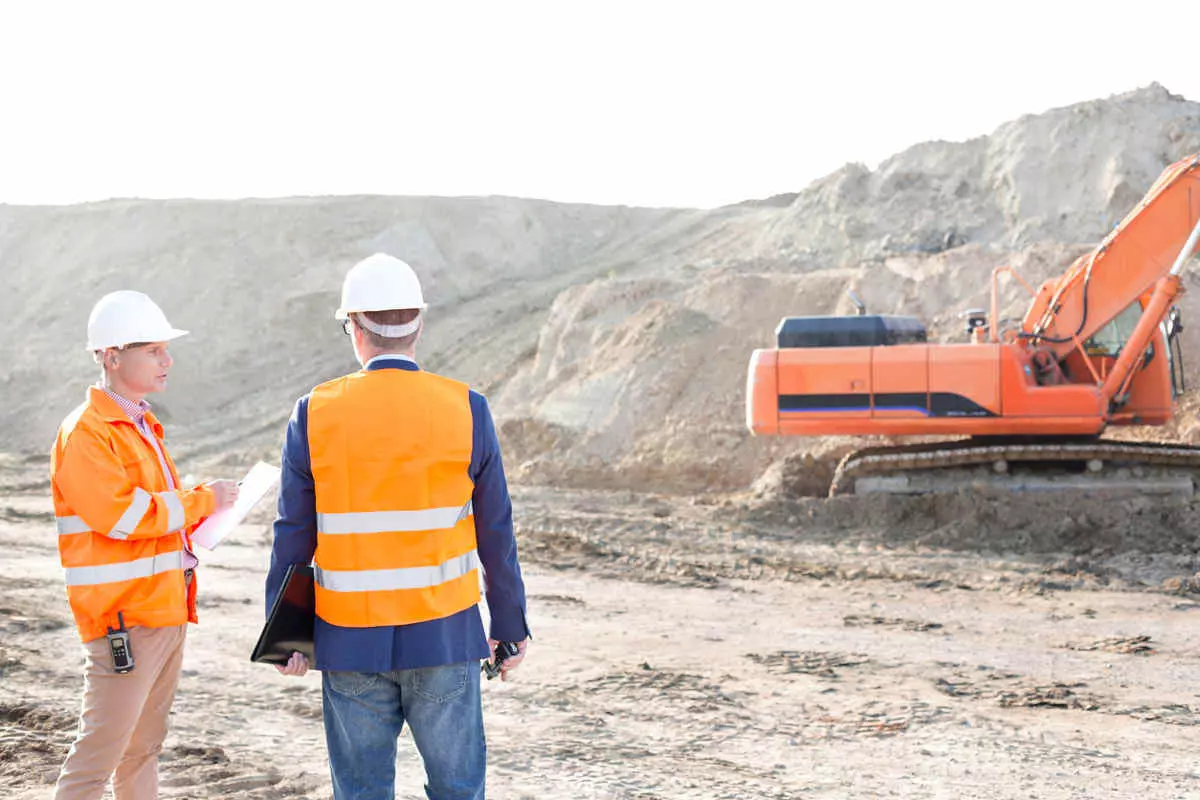
When a company requires excavation work on a job site, OSHA mandates that a competent person be there to ensure that the requirements for the OSHA standard are being met. This is necessary to ensure employee safety.

What is a Competent Person?

According to OSHA, a competent person is “one who is capable of identifying existing and predictable hazards in the surroundings or working conditions which are unsanitary, hazardous, or dangerous to employees, and who has authorization to take prompt corrective measures to eliminate them.” (29 CFR 1926.32(f))

This designated person has the responsibility to inspect the trenches and adjacent areas daily, or as conditions change. They need to be able to identify existing issues and predictable hazards. Once identified, the competent person is then able to take corrective measures to control or eliminate these hazardous conditions.

Therefore, the competent person must have very specific training and be knowledgeable about the correct use of protective systems, soil analysis, and the requirements of all trench safety standards. The training course is intended for employees that have the responsibility for ensuring healthy, safe, and sanitary working conditions such as construction supervisors or managers. 

Competent Person Training Course

In order to qualify as a competent person, a trainee must complete the OSHA 30 Hour Construction Training Course. It is handled by an authorized Outreach Trainer and is conducted over the course of 4 consecutive days. Each participant is given their own copy of the OSHA CFR 1926 Construction Standards.

There are a wide variety of topics covered in this 30 hour training course. Some of these topics include, but are not limited to:

  • OSHA requirements for a competent person
  • Competent person responsibilities
  • General requirements for inspections and safety training
  • Health hazards associated with construction work
  • State OSHA programs
  • Fire protection and prevention
  • Material handling, storage and disposal
  • Electrical safety
  • Fall protection for construction
  • Scaffolding on construction sites
  • Trenching and excavation
  • Masonry and concrete construction
  • Demolition work
  • Welding and cutting requirements
  • Power and hand tool use
  • Structural steel construction

Once the course is successfully completed, the trainee will receive an OSHA 30 Hour Construction Training card to place in their wallet. In addition, they will receive a personalized certificate showing that they completed and passed the course.

Rely on Our Expertise to Stay Safe

On major excavation projects there is a lot to think about: OSHA regulations, having the right equipment, and keeping the crew safe. Luby Shoring Services was founded with the goal of providing a wide range of equipment options to get the job done in the most effective and safest way possible. We are confident in our shoring products and know that the workers are safe.

Whether your next job is manhole installations, deep excavation work, horizontal drilling, or any other shoring job, call Luby Shoring Services today at (636) 660-7467 or fill out our online contact form.

Save

Save

Save

Save